Reckless Wildlife Mismanagement in Colorado
Climb a wind-scoured ridge after a fresh snow, or let a trail camera rest along a shadowed river bend, and the land will whisper a truth our state agency refuses to hear: the beaver shaping its wetlands, the pine marten gliding through spruce boughs, the bobcat threading through moonlit dustings of snow—these are not commodities. Our wild cousins are artists of balance, fellow citizens of wild Colorado, each species weaving resilience into forests, grasslands, and watersheds that sustain us all.
Yet Colorado Parks and Wildlife reduces these living threads of the wild tapestry to one cold, transactional word: FURBEARER—as if their worth begins and ends with the knife stroke of a trapper; as if the price of a pelt could ever equal their contribution to rivers, soil, songbirds, aspen groves, and the quiet workings of the wild.
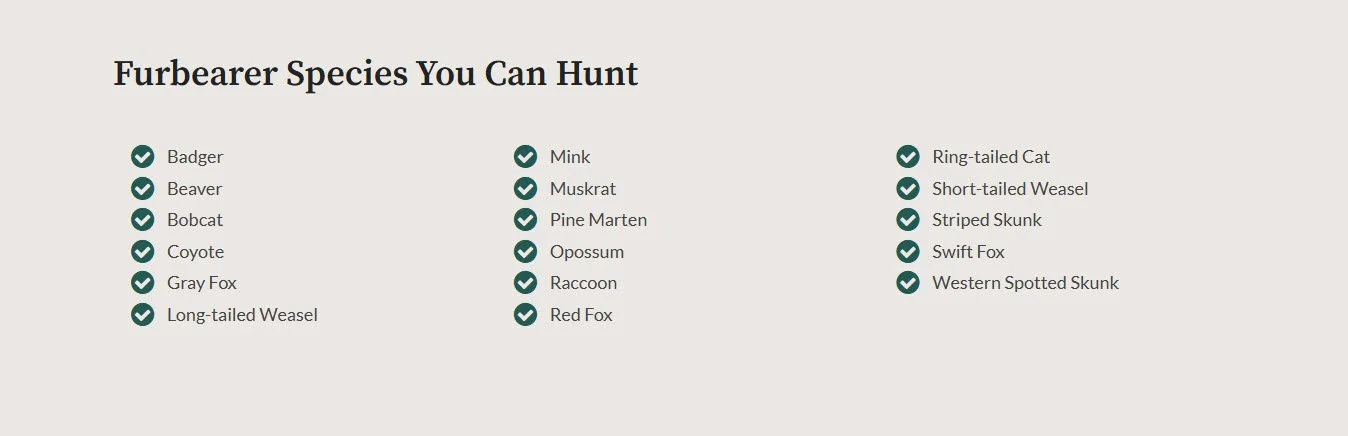
There are nineteen furbearer species in Colorado, including lynx and wolverine. Those two are protected from hunting and trapping. The remaining seventeencan be slaughtered in unlimited numbers by hunters and trappers during winter months, a time of year when wildlife are dealing with daily survival challenges. Colorado Parks and Wildlife don’t have a single wildlife management plan for any of these species, no clue how many are on the landscape and yet allow for unlimited slaughter each year. Reckless, lazy, unprofessional wildlife management. Wildlife deserve better.
Wildlife management should never be reduced to a simple annual inventory of targets for hunters and trappers. When management asks only, “Do we have enough animals on the landscape this year for hunters and trappers to kill?” it ignores nearly everything that matters to the long–term biological stability of these species, and everything they contribute to the ecosystem that holds them. That narrow lens treats wildlife as a commodity instead of members of a living community, each species carrying out irreplaceable tasks—seed dispersal, nutrient cycling, predation, population balancing, landscape engineering, and reminding us that life on this planet is bigger than our personal goals.
Healthy populations don’t come from quotas alone. They come from understanding what each species needs to thrive. For mountain lions, that’s enough space to hunt without constant human harassment, sufficient deer and elk populations defined by ecological productivity, and connected habitat corridors so their genes don’t become trapped in isolated pockets. For wolves, coyotes, foxes, and bears, it’s access to natural food sources, intact denning sites, unfragmented habitat, and science–based hunting policies grounded in ecological impact rather than social pressure. For beavers, it means recognizing that they are engineers who create wetlands that benefit birds, amphibians, trout, moose, insects, and the entire watershed. Every species carries an ecological job description we still don’t fully understand.
Real ecosystem management respects and supports these relationships. It asks, “What does each species require to maximize the health of its population and strengthen the biodiversity of the place it inhabits?” The answer demands habitat preservation, connectivity, scientific research, monitoring of population dynamics, and management guided by ecological function rather than public demand for more tags and trapping seasons. When we respect wildlife for the roles they play in the entire ecological network, we shift from extraction to stewardship. We allow science, not exploitation, to define how we coexist with every creature that makes the wild truly wild.
To treat these animals as limitless inventory for commercial exploitation is not stewardship. It is misguided, reckless, and unprofessional management masquerading as tradition with no science-based plans for each species, no quotas, no population studies, no habitat assessments to guarantee their survival. The very agency that counts elk by helicopter and tracks deer migrations with GPS shrugs at the fate of these smaller carnivores, inviting unlimited slaughter with no scientific grounding whatsoever.
This is not conservation. This is an abandonment of responsibility.
The North American Model of Wildlife Conservation—so often praised by sportsmen—was forged to stop market hunting, not resurrect it. One of its most fundamental principles is crystal clear: “eliminate markets for wildlife.”
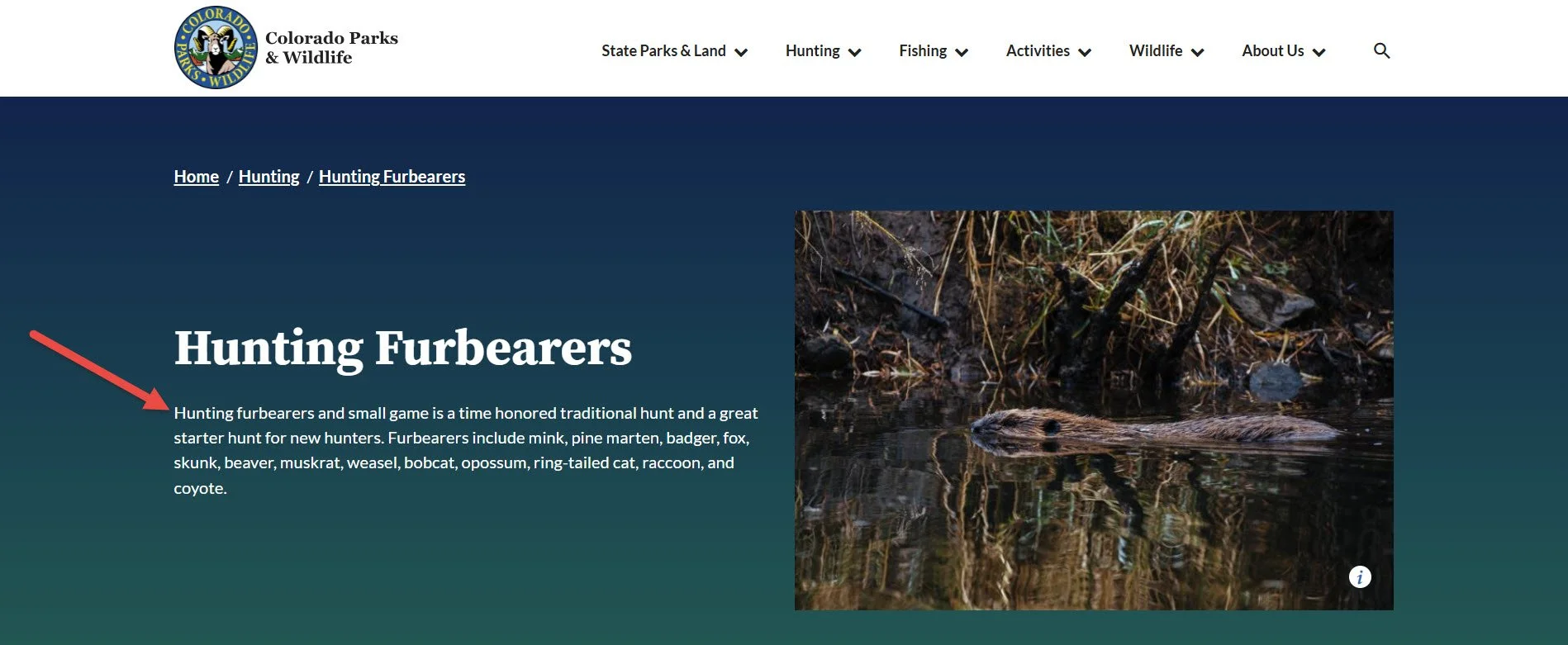
Yet CPW promotes the sale of pelts into global markets and celebrates this commercial killing as a “time-honored tradition” and a “great starter hunt.” They are not teaching beginners to respect wild lives. They are teaching them to profit from killing without understanding what is lost when a trap closes on a fox or a marten disappears from a forest that relies on it.
Colorado citizens deserves an agency that protects wildlife for the benefit of all, not one that panders to unlimited killing of a species. Our wild neighbors are not trinkets for trade—they are the pulse of healthy ecosystems.
If you believe they are worth more alive than skinned and shipped overseas, you can speak up by calling CPW at 303-297-1192. Tell CPW that wildlife management must be rooted in science, respect, and the public trust—not in profit. Let them know that a beaver is not a furbearer to be taken at whim, but a partner building wetlands in a drying West. A bobcat is not a commodity; it is a master of balance. A fox is not inventory; it is a living spark in the grand, wild symphony of Colorado.
Our wildlife is not merchandise. It is a birthright. And it is time we demanded its respect and support, for not just our wildlife but also our essential wild lands.