The light grows thin and brittle as winter deepens, and a hush settles over the forest like a heavy blanket of frost. In that silence, a female mountain lion and her playful youngster return to what remains of a mule deer—life becoming life again, as it has since the first winter winds swept across these ridges. The kitten bats at frozen grass and scraps of hide, innocence wrapped in fur and curiosity. His mother, a seasoned traveler of hunger and weathered nights, carries a different awareness. Her nose lowers to the carcass, reading the registry of scents: fox, perhaps, or a bold coyote. Who else has dined here under moonlight? Was this their first meal or simply another chapter in the ledger of wild consumption? We do not know. Nature reveals only what she must.
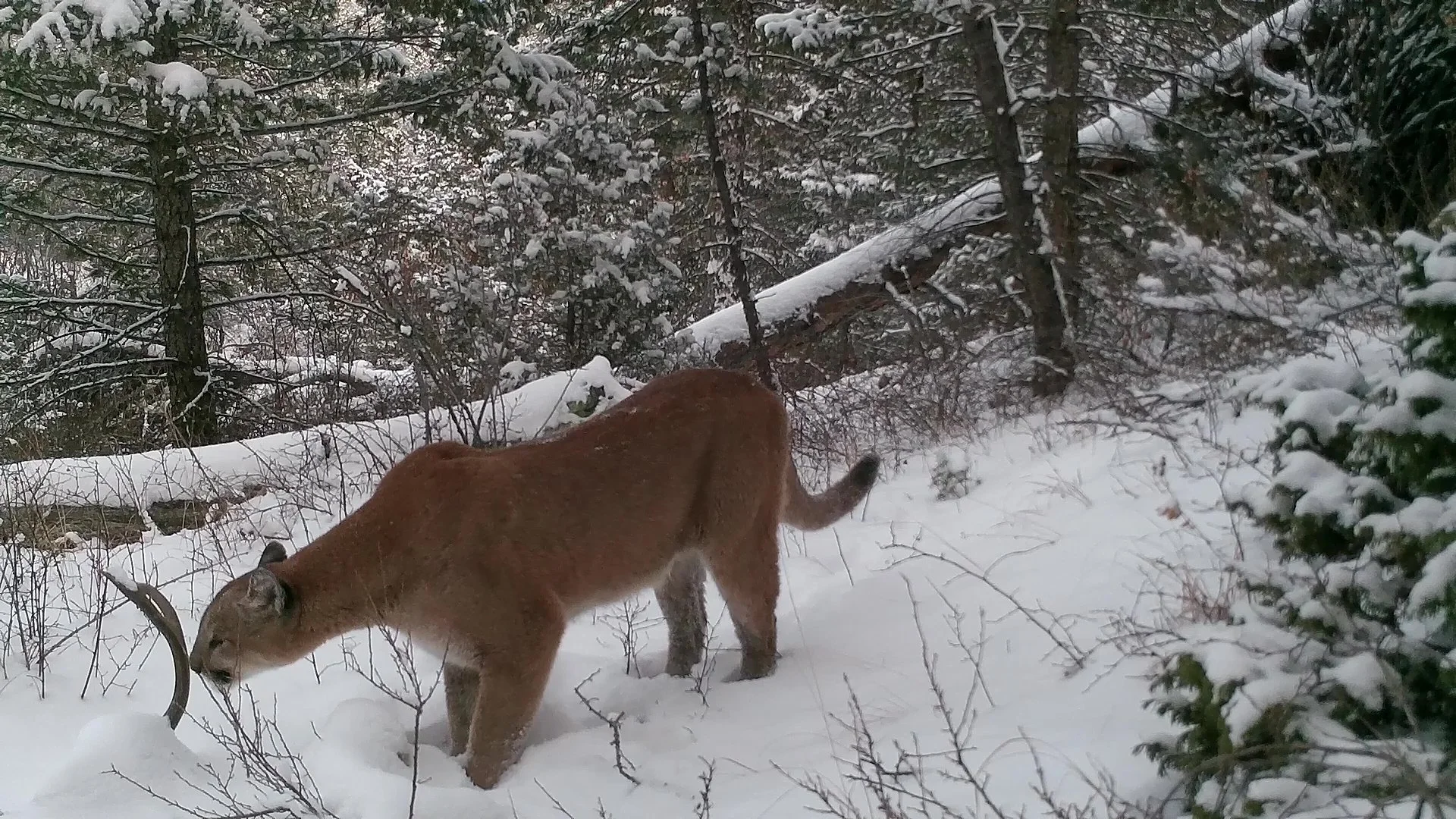
Adult female lion checks to see which animals have visited this mule deer carcass.
In this cold arithmetic of winter, the question for these cats is ancient and unrelenting: How do we take in more life than we spend? Every minute exposed to the cold drains precious heat. Every step on hardened snow spends energy earned from meat. Yet they move with such quiet purpose—built by mountains themselves to endure, to stalk, to live. And beyond their survival lies a larger truth: their presence shapes the land. Healthy rivers and riparian corridors owe their vigor, in part, to the unseen labor of predators. Elk and deer keep moving, preventing the overgrazing of willow and aspen. Forests breathe easier. Songbirds find shelter. Beavers find building materials. The orchestra of life remains in tune.
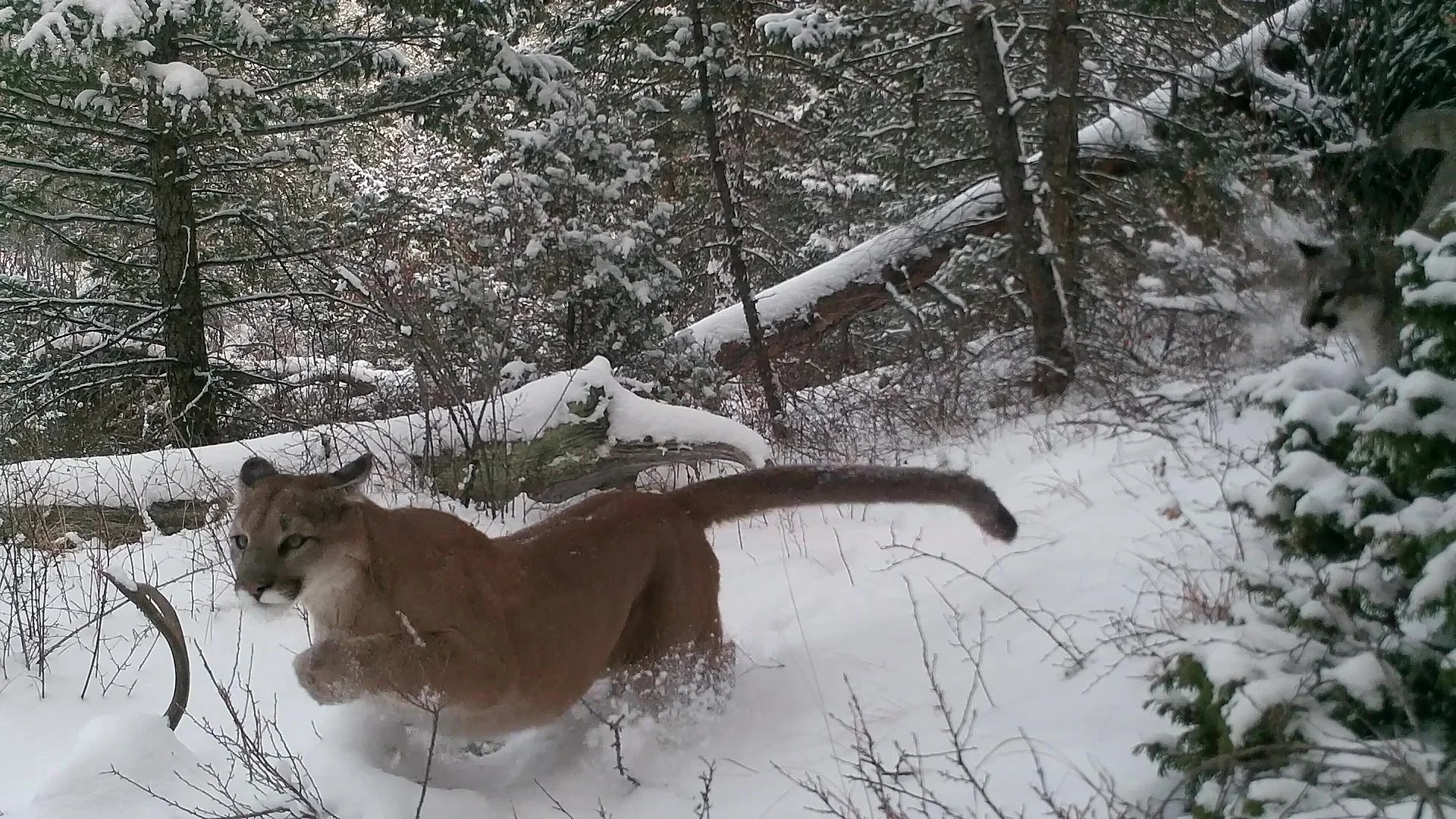
She is spooked by her kitten in the upper right of the frame.
Insects, scavengers, apex hunters, microbes dancing unseen in the soil—every participant matters. To cherish one while neglecting another is to break the music apart and call the chaos “management.” The old order of treating wildlife like items on a café menu—bobcat here, elk there, mountain lion somewhere in the margins—must end. Life does not thrive species by species. It thrives as a chorus, each voice answering and shaping the others.
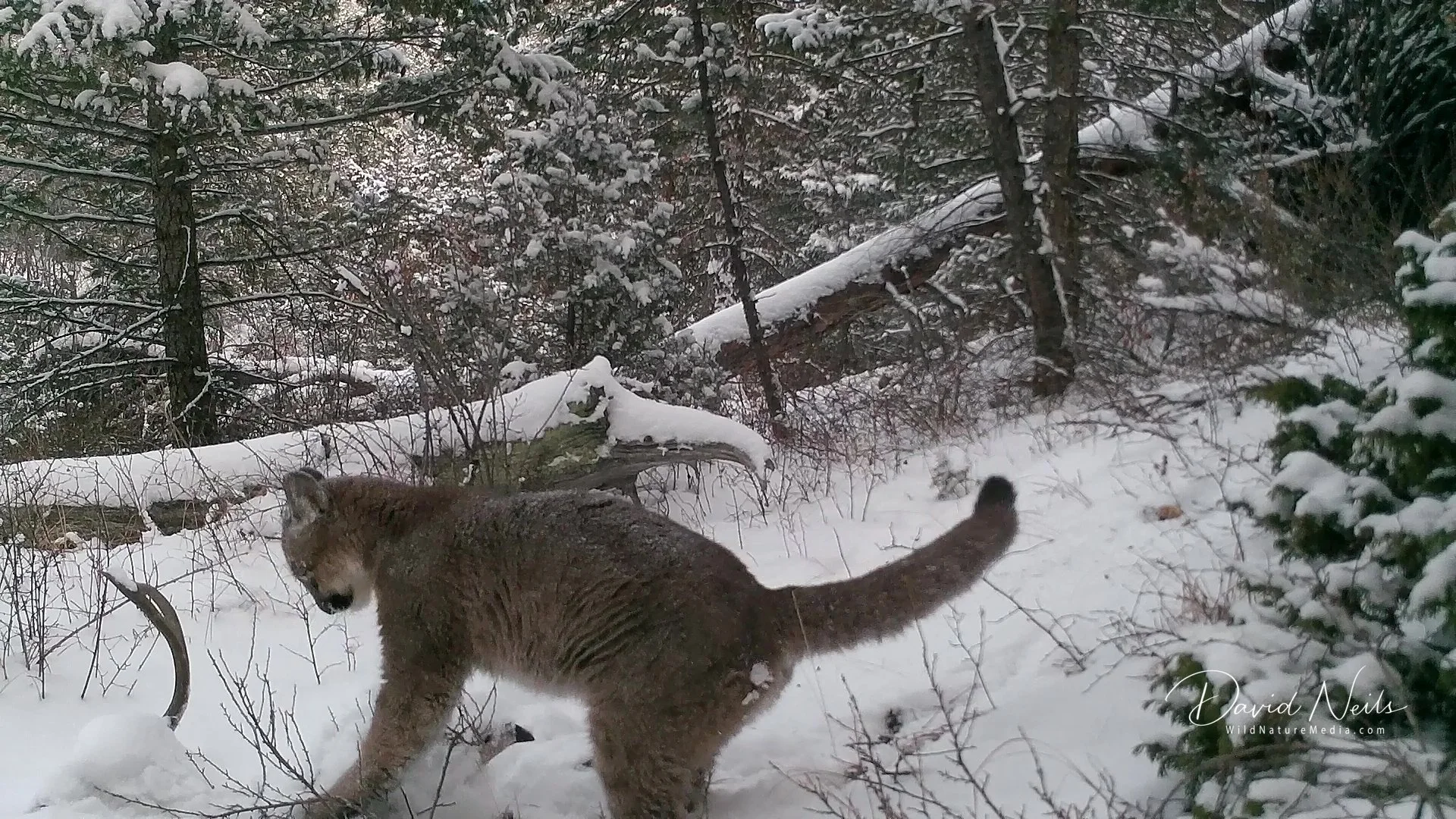
The kitten plays with the carcass. You can see the mule deer’s foot under her belly.
Let us adopt the wider lens, the lens of ecosystems. Let us defend not just animals we admire or landscapes that look pretty on postcards, but the wild relationships that sustain them. Our own lives, and the life of every animal, insect, river, prairie, forest, and ridgeline, depend on Nature's wild orchestra.