Winter Solstice Arrives Too Quickly
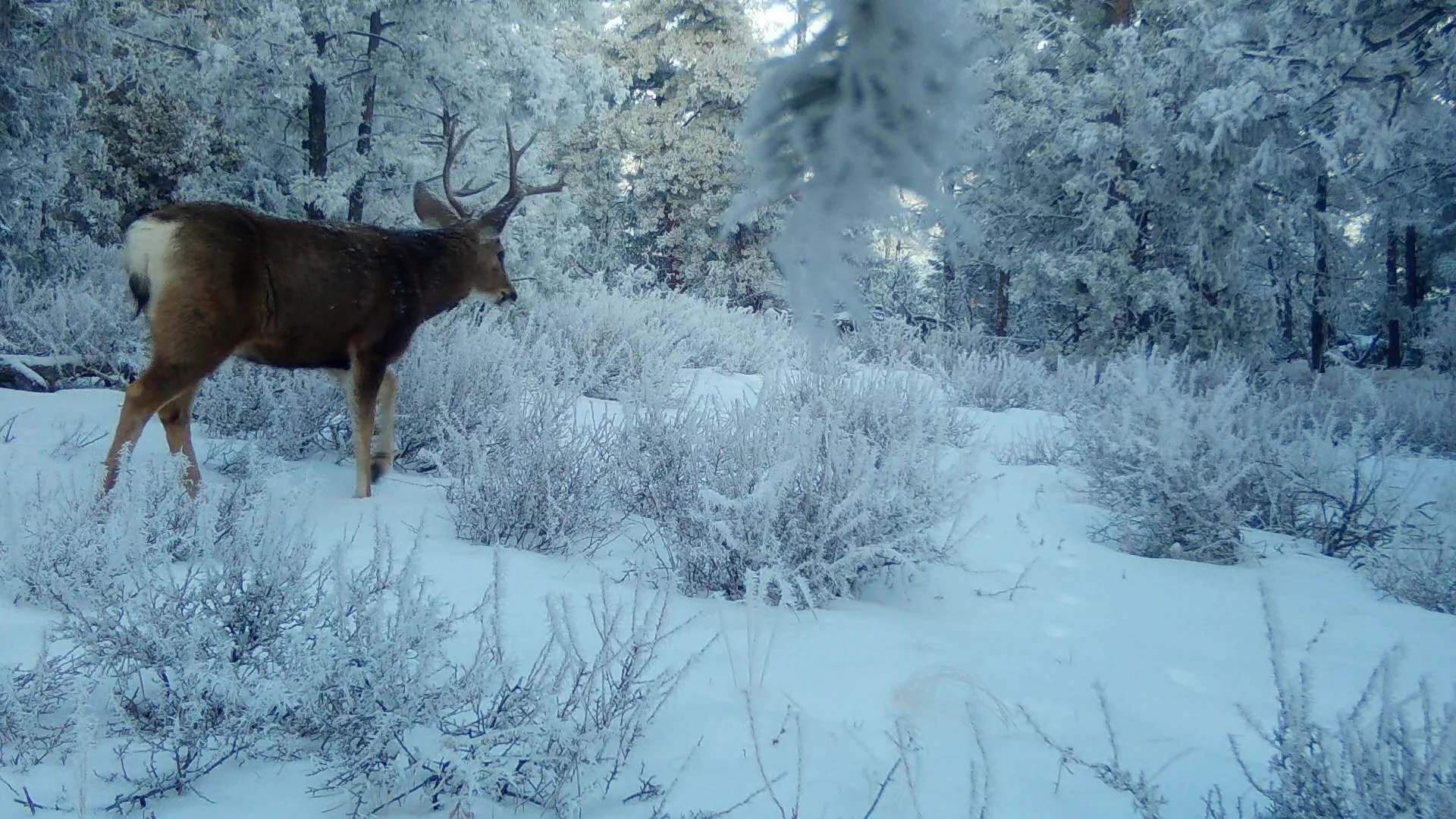
Mule deer foraging on rabbit brush and mountain mahogany during the winter months.
The winter solstice arrives quietly, without fanfare, slipping in on the shortest day of the year as if it doesn’t want to interrupt us. So many people mark it as something to tolerate—a turning point endured rather than welcomed—already longing for longer days and warmer light. I feel the opposite pull. I want to slow this celestial train down, to linger in the space between September and January, where the world is shedding excess and learning how to live with less. These are not empty days. They are days of transition, days of adjustment, days when life recalibrates itself with honesty and precision.
Wildlife understands this passage far better than we do. As winter tightens its grip, every movement, every decision is shaped by a simple and unforgiving question: How do I maximize calorie intake while minimizing calorie loss? There’s no romance in that equation, but there is beauty. It’s a beauty rooted in efficiency, restraint, and deep evolutionary wisdom. Nothing is wasted. Nothing is rushed. Survival itself becomes a form of quiet grace.
In my early twenties, I spent long winter hours along the Bitterroot River south of Lolo, Montana, watching whitetail deer move through this season with practiced familiarity. By December, they had entered the ancient ritual of yarding—gathering into traditional wintering areas where the distance between bedding and feeding grounds shrinks to its bare minimum. Over time, their hooves carved deep trenches into the snow, narrow corridors of necessity they would travel day after day. Those paths weren’t signs of hardship alone; they were evidence of memory, of generational knowledge passed down without a single word.
Along the same stretch of river, Canada geese lined up on the bank near cold, dark water, tucking their heads deep beneath their wings, drawing comfort from the warmth of their own bodies. Smaller birds vanished into the thickest tangles of brush as night approached, choosing shelter over exposure, stillness over risk. And yet, when daylight returned—however brief—it felt as though there was still a lilt in the landscape. The birds moved with purpose, the deer fed calmly, and everything seemed quietly content to be exactly what it was in that moment. Winter hadn’t stolen their joy; it had refined it.
Although I still spend more time in wild places than most, I miss my years as a professional forester in western Montana. Back then, the seasons weren’t abstract concepts—they were physical realities I read in snow depth, tree shadows, and the angle of the sun. The plants around me told a story of transition daily. I could feel the land easing away from one season and committing itself fully to the next. Fall into winter was always my favorite passage, not because it was dramatic, but because it was honest. There was no pretending about what lay ahead.
The older I get, the more I want to slow all of this down. Like Rumpelstiltskin, I sometimes feel as though I fell asleep and woke up to find time had spun itself into something unrecognizable. I welcome the idea of lingering longer before the solstice, of stretching out these darker months rather than rushing through them. And maybe the remedy is as simple as it has always been: returning to nature, again and again, until my pace softens. Out there, the land doesn’t hurry, and neither does the heart—once it remembers how to listen.