Tracking Mountain Lions March 28, 2026
There are still places in Northern Colorado where the land remembers what it was before engines, fences, and hoofbeats rearranged the story. Places without ATV tracks scribbled across the ridgelines, without 4WD roads clawing into the timber, without livestock pressing the wild flat. In these pockets of true wild country, wildlife behaves as wildlife should—unguarded, unpatterned by us, fully itself. This is where we’re going.
Our Mountain Lion Tracking hike steps into that rare trifecta: wild land, wild lions, wild behavior. The kind of landscape where a lion can move like a mist through timber and stone, unseen yet ever-present. We will be reading a living manuscript written in snow, sand, or soft dirt—whatever substrate Mother Nature offers us that day. Each track is a sentence. Each stride, a paragraph. Together, they tell the intimate story of how a mountain lion moves through its kingdom.
We’ll search not only for tracks, but for scrapes—those deliberate, often misunderstood messages lions leave behind. When we find them, we’ll lean in close and ask why. Was it a territorial boundary? A communication to a mate? A declaration of dominance? A signpost in a travel corridor? Typically, there are four core reasons a lion disturbs the earth in this way, and understanding them opens a window into a social world most people never realize exists.
Mountain lions hunt and navigate very differently than our other common Colorado carnivores. They are masters of contour, of shadow, of patience. Where a coyote may trot a road and a bear may lumber through a drainage, a lion threads terrain with intention—using slope, cover, and silence as tools. Tracking them is about finding connection: predator to prey, terrain and plant communities to movement.
This is an opportunity to experience WILD—not the curated version, but the real thing. To witness the ripple effect of an apex predator, and more importantly, a keystone species whose presence shapes everything from wild ungulate behavior to vegetation patterns. When you begin to see the landscape through the lens of the mountain lion, the entire ecosystem rearranges itself before your eyes.
Space is intentionally limited to seven mountain lion enthusiasts. Small enough to move quietly. Small enough to listen. Small enough to feel the pulse of a landscape that still beats to its own rhythm.
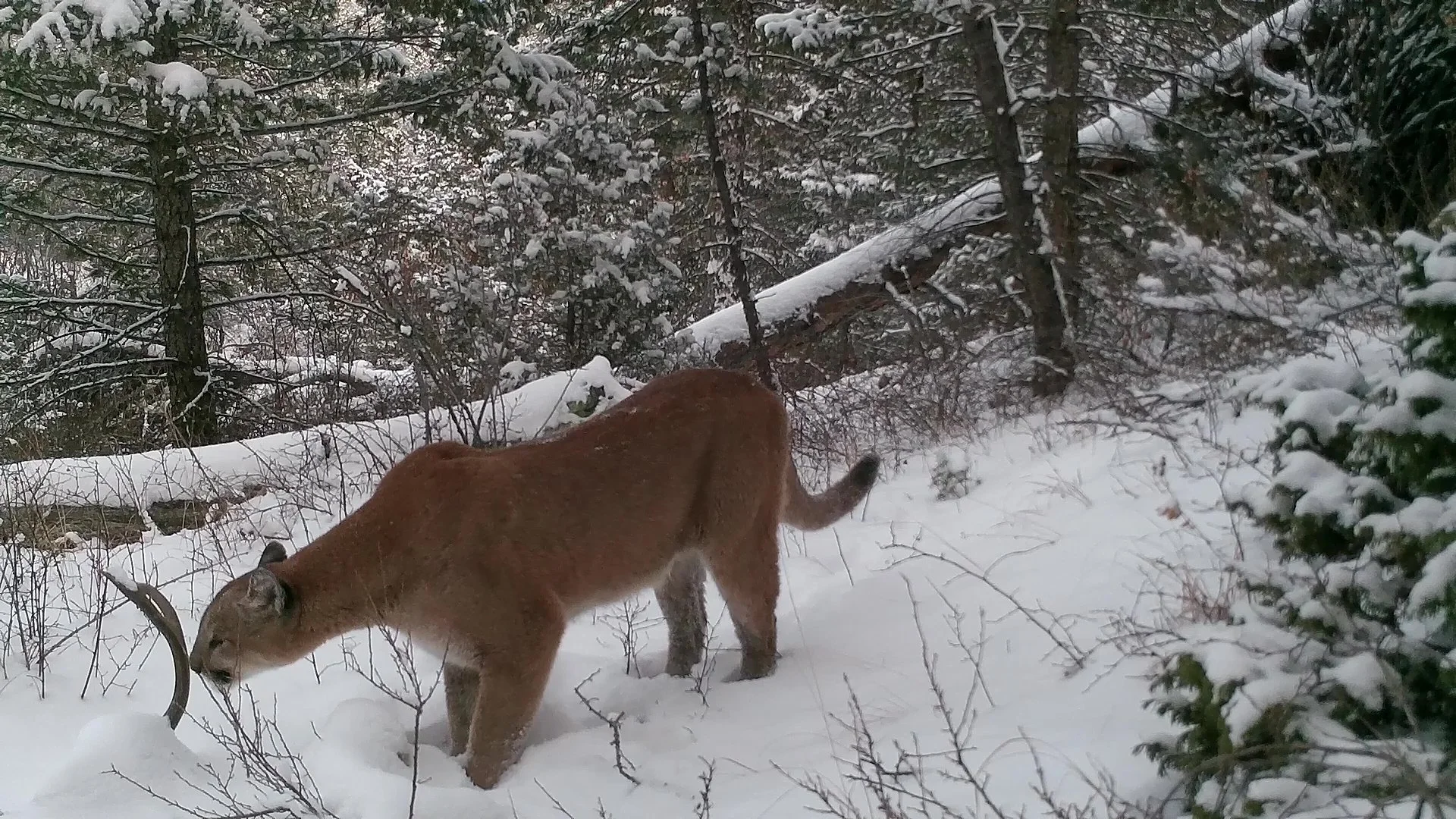
A mountain lion checking to see who has visited this mule deer carcass since it was last feeding on it.
What: Tracking Mountain Lions
Where: Northwest of Fort Collins (details will be sent to participants)
We will meet at Me Oh My Coffee and Pie in Laporte, Colorado at 7:15 am, 3310 WCR 54G, Laporte CO 80535
When: Saturday, March 28, 7:15 a.m. - 3:30 p.m.
Cost: $220 per participant
Please pay via Venmo (preferred) or use the PayPal link below.
The Hike Includes:
looking for mountain lion tracks and then backtrack to better understand their behavior
air currents and how they decide wildlife movement for many mammals.
learning how mountain lions hunt and navigate across their territories
why mountain lions are elusive and yet predictable
how mountain lions are different from other predators
being safe in mountain lion country
learning how to maximize your chances of seeing wildlife and wildlife activity
being prepared to deal with backcountry emergencies
setting up remote cameras to film wildlife successfully
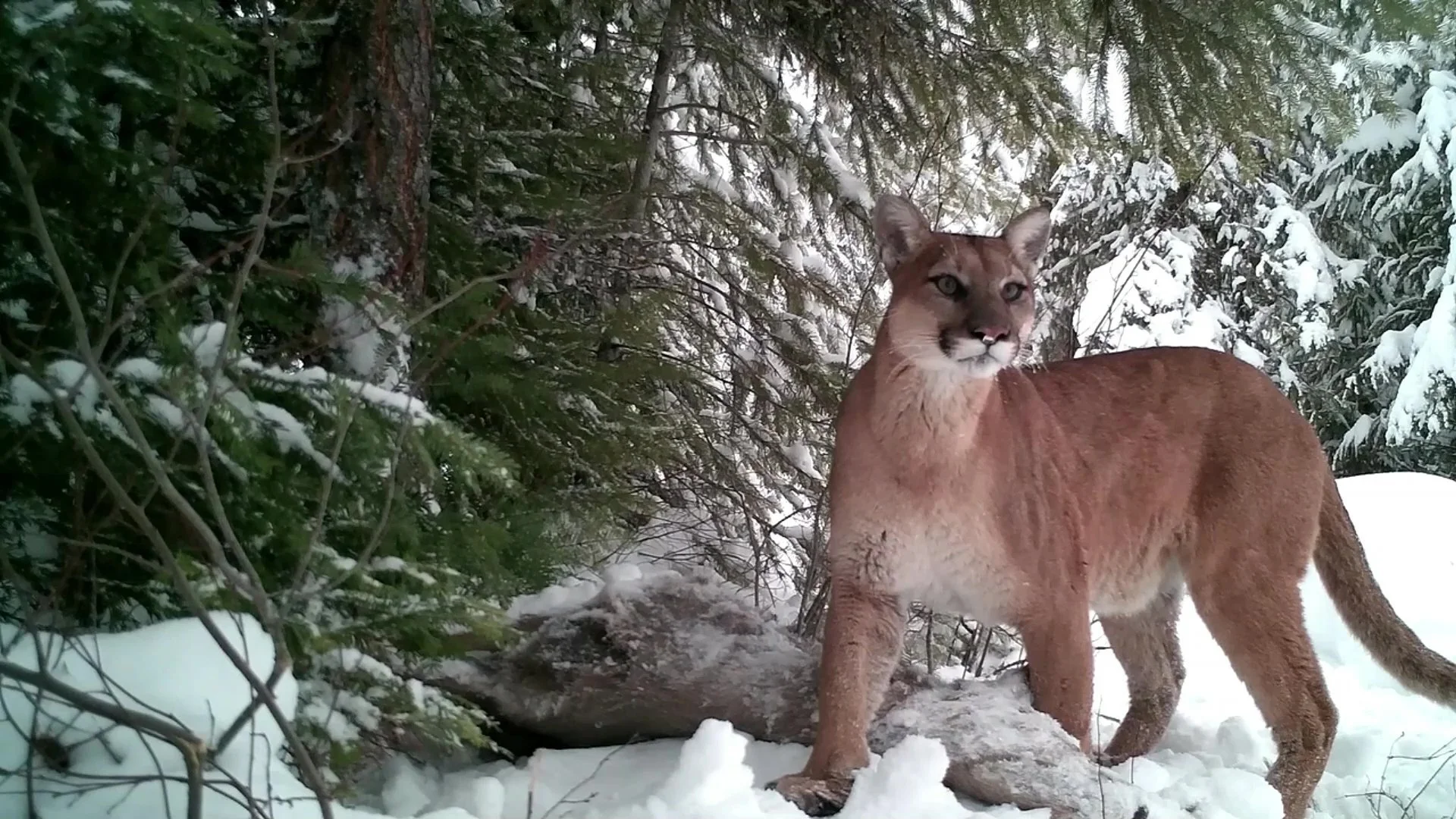
Female mountain lion stands guard over a whitetail deer. I filmed her and her cubs feeding on the carcass for five days. When they’d leave the carcass she’d cover it up with more than a foot of snow to keep the birds off. Once the birds find it they tell all the scavengers, including the fox and coyote.
WHAT TO BRING
layered clothing
decent footwear for hiking (closed toe footwear)
snacks and lunch
at least two liters of water
camera (cell phone is plenty)
a sauntering spirit
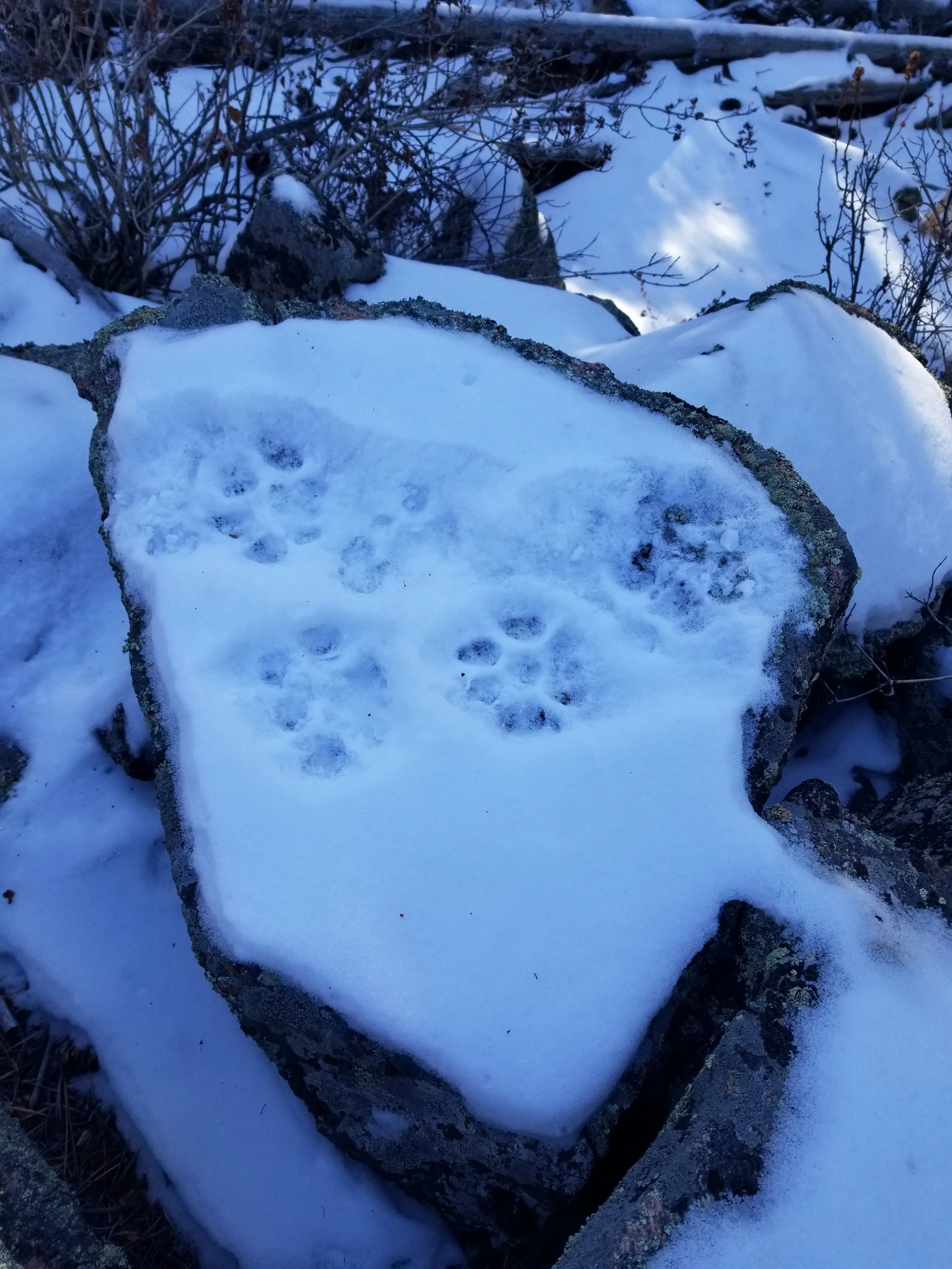
Mountain lions tracks from the Mountain Lion Tracking hike on January 10, 2026. We followed the tracks for 1.5 miles, up a mountain side, through a saddle and down into a steep draw where the lion was most likely headed to get water.