
Where Mountain Lions Roam
Reading the Land and the Joy of Being There
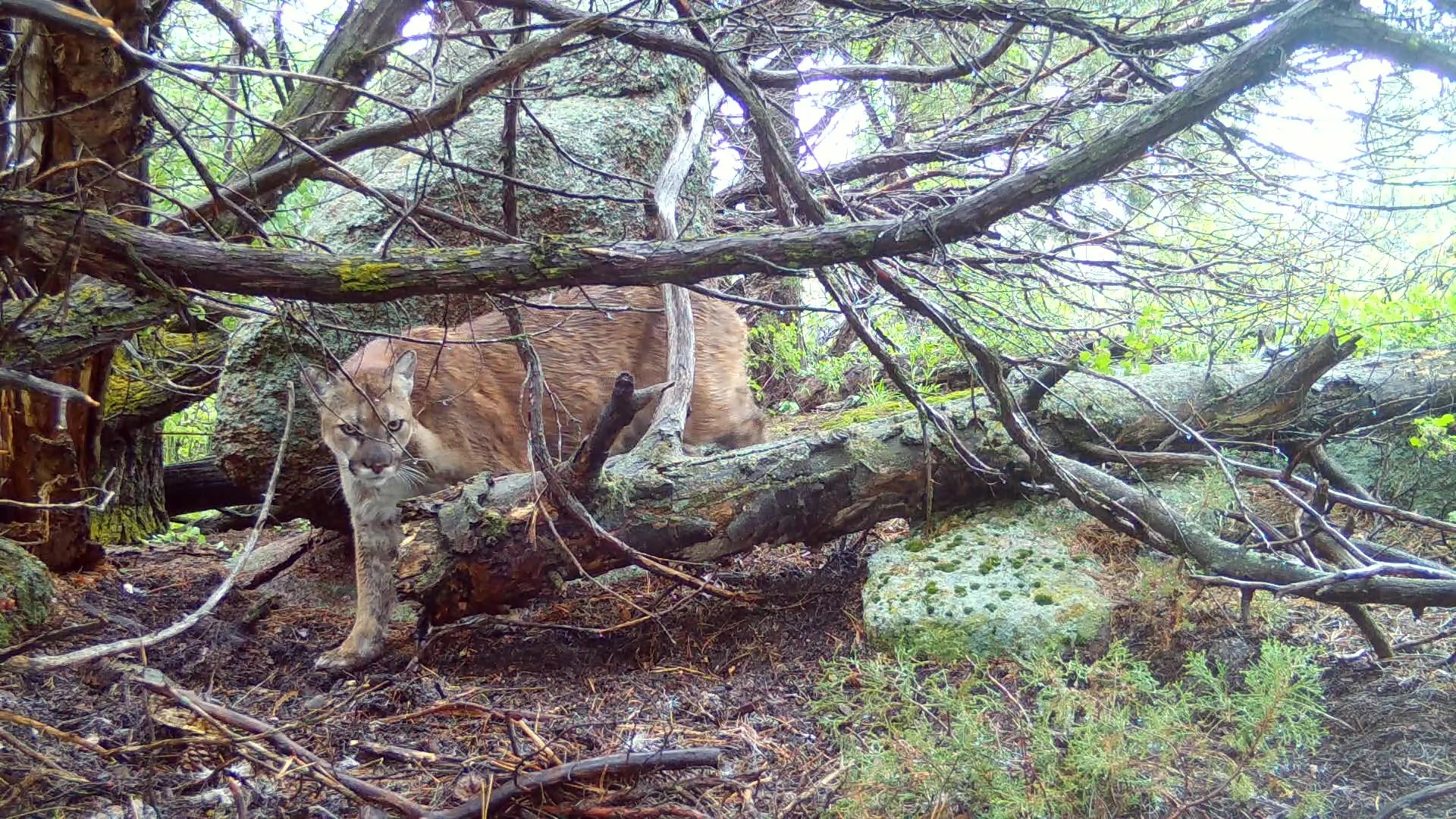
Juvenile mountain lion sharing a meal with the adult female mountain lion (mom). The mule deer carcass is buried in the duff (material on top the soil) in front of the juvenile lion.
When: May 15, 2026 - 6:00 - 8:00 PM
Additional Hike: May 16, 2026 - 8:30 am - 1:00 pm, Aiken Canyon Preserve
Where: Bear Creek Nature Center
245 Bear Creek Road, Colorado Springs, CO 80906
To register, visit the Pikes Peak Birding and Nature Festival Website. Registration will take place starting on April 11, 2026.
Mountain lions are the quiet architects of Colorado’s wild places. They move through the landscape largely unseen, shaping ecosystems not through noise or numbers, but through presence. After more than two decades of studying and filming mountain lions in completely wild places, I’ve learned that finding their activity isn’t about luck—it’s about learning how to read the land, slow down, and think like a lion. This presentation is an invitation to step into that mindset and begin seeing what has always been there.
Mountain lions possess a set of attributes and behaviors unlike any other carnivore in Colorado—solitary, wide-ranging, efficient, and deeply tied to terrain, prey movement, and seasonal conditions. As a keystone species, their influence extends far beyond their own survival, quietly shaping prey behavior, vegetation health, and overall ecosystem balance. When lions are present, the land functions differently—and more honestly.
We’ll explore how to recognize clear signs of mountain lion activity, including tracks, feces, scrapes, and fresh carcasses, and how each tells a different chapter of the story. We’ll look at how to choose productive areas to study and film mountain lions by understanding four natural factors that consistently guide their movement. I’ll also share what belongs in your pack, not just in terms of gear, but mindset—patience, humility, and curiosity are just as essential as boots and cameras. And finally, we’ll talk about staying safe in mountain lion country, not through fear, but through awareness, respect, and knowledge.
This isn’t about chasing an apex predator. It’s about learning to listen to the landscape—and letting the mountain lion reveal itself on its own terms.

Black bears, deer, elk and moose do not overgraze the area around this spring because mountain lions keep them moving. The area stays lush and green all summer long as a result. This is an excellent example of the value of mountain lions as a keystone species.
MEET YOUR HOST - DAVID NEILS

David Neils and his dog Autumn enjoying a break in some of the best mountain lion country in Northern Colorado.
I offer these events as a way to share my passion for getting to know these wild places well. Like a great friend, they become an intimate part of our lives, nourish our souls and bring peace to our hearts. And it’s a chance to pay it forward after the gift I received as a child to spend time alone in the Cabinet Mountains Wilderness Area of NW Montana.
The last twenty years have been spent studying and filming mountain lions in some of the wildest country of Colorado and Montana. I developed a system, using four natural factors, which allows me to pinpoint mountain lion activity throughout the United States, Canada and Chile. I enjoy sharing this knowledge and supporting others to study this magnificent apex predator through a personalized Mountain Lion Workshop which includes mapping mountain lion activity in the client’s chosen area, up to 100 square miles.
In addition to sharing a passion for mountain lions and other wildlife, I enjoy supporting others to navigate boldly and safely in the backcountry. I’ve been refining a system since 1971, Ten Essentials Plus, which eliminates many of the factors that result in Search and Rescue operations. In fact, it completely eliminates the Search in Search and Rescue. I also provide hands on orienteering courses, supporting clients to have the confidence to explore the wild areas around them.