Wildlife Guzzler for Dry Colorado Ridge
Morning light had only begun to reach across the folds of Green Ridge when we shouldered our tools and stepped into the work. The ground still held the memory of cold night air, but the sun promised heat, the kind that presses down by mid afternoon and pulls the last beads of moisture from shallow soil. In country like this, water is not simply comfort, it is survival, measured in wingbeats, hoofprints, and quiet heartbeats hidden in the shade of juniper and stone.
We had come to give that survival a better chance.
Ulli, Dan, Cole, Jacob, and I moved with the quiet purpose that comes from knowing the work matters. There is a certain honesty in projects like this, the kind that leaves dirt beneath your fingernails and sweat running down your spine. It is work done not for applause, but for the unseen lives that depend on it long after the sound of shovels fades.
Years ago, water lingered longer in this country. Springs held through the heat of summer, snowmelt fed seeps that lasted deep into fall. But seasons have shifted, winters have shortened, and the dependable trickle of yesterday has too often become the dry silence of today. Climate patterns change, grazing pressure alters vegetation, development reshapes watersheds, and wildlife feel the weight of those changes first. A fawn searching for moisture, a covey of quail pacing the edge of thirst, a coyote traveling miles farther than its ancestors ever had to travel, all are reminders that water is the currency of life in the West.
Before long, the rhythm of work settled in.
Our first task was to relevel the forty gallon commercial guzzler. A guzzler only works as well as its float and valve allow, and even the slightest tilt can turn a reliable water source into a dry basin. We knelt beside it, hands steady, eyes focused on small details that make large differences. Once leveled, the float moved as it should, rising and falling with quiet precision, the way it was designed to do.
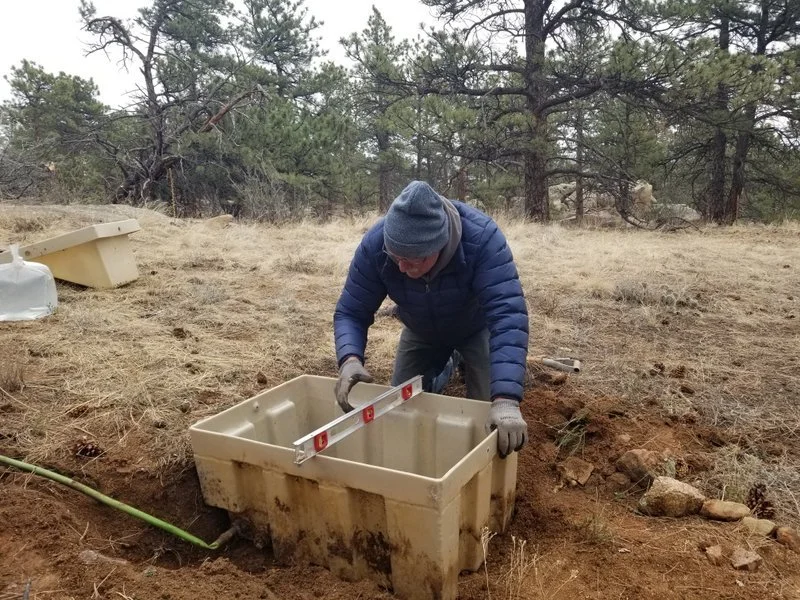
Rainmaker 40 gallon wildlife guzzler
Ensuring the wildlife guzzler is level, allowing the float and valve to operate.
Next came the leaks. Water lost through a pinhole crack is water denied to something that needs it. We traced each line, tightened fittings, sealed weak points, and watched carefully as the system filled again. No dripping, no waste, just the clean promise of stored water waiting for thirsty mouths.
We drained both commercial guzzlers, scrubbed them clean, and filled them once more. There is something deeply satisfying about seeing fresh water settle into a basin, reflecting the sky like a small mirror placed among rock and dust.
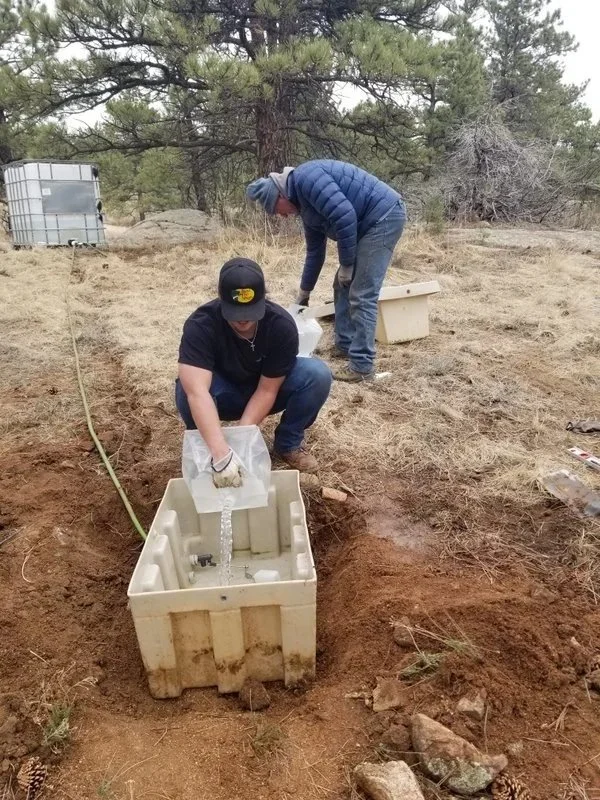
Rainmaker 40 gallon wildlife guzzler gets water.
Jacob adding water after cleaning and leveling the guzzler.
While we worked, the first visitors arrived.
A pair of small birds dropped in, wings flickering in short bursts of confidence. They did not wait for us to leave. Instead, they hopped along the rim, dipping their beaks, lifting their heads, and swallowing with the urgency that comes from knowing water may not be easy to find elsewhere. Their presence felt like approval, immediate and honest.
The land does not send thank you notes, but moments like that are close enough.
Then came the work of building something new.
We dug into the earth to set the fifty gallon Rubbermaid tank, carving a place where the ground would cradle it securely. Soil piled beside us, rocks shifted underfoot, and the sun climbed higher with each passing minute. This new tank would serve as a year round source, capable of withstanding freezing temperatures that would force the seasonal guzzlers into winter rest.
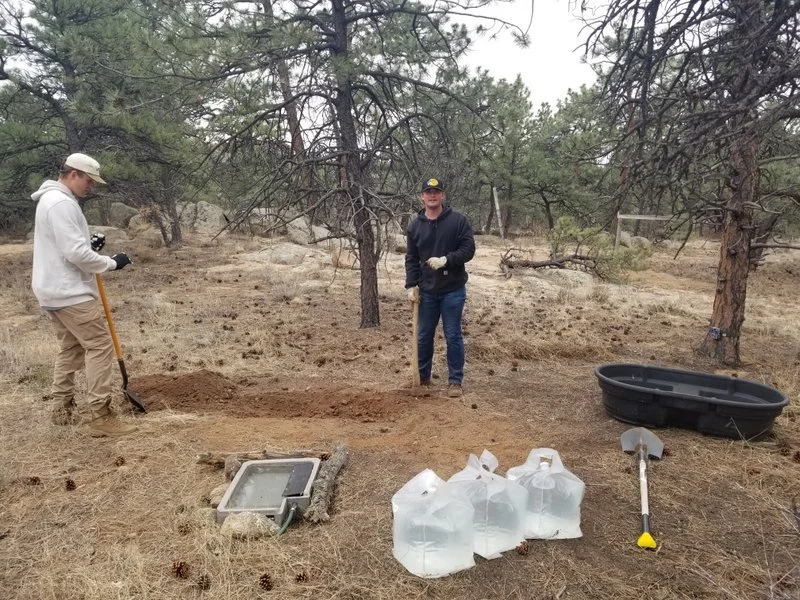
Digging Hole for 50 gallon Rubbermaid Tank
Cole and Jacob tackling the hole for the 50 gallon Rubbermaid tank.
Once the hole was ready, we lowered the tank into place, leveled it with care, and lined the edges with stone. Those rocks were more than decoration. They provided footing for birds, insects, and small mammals, safe access to life saving water without slipping into danger.
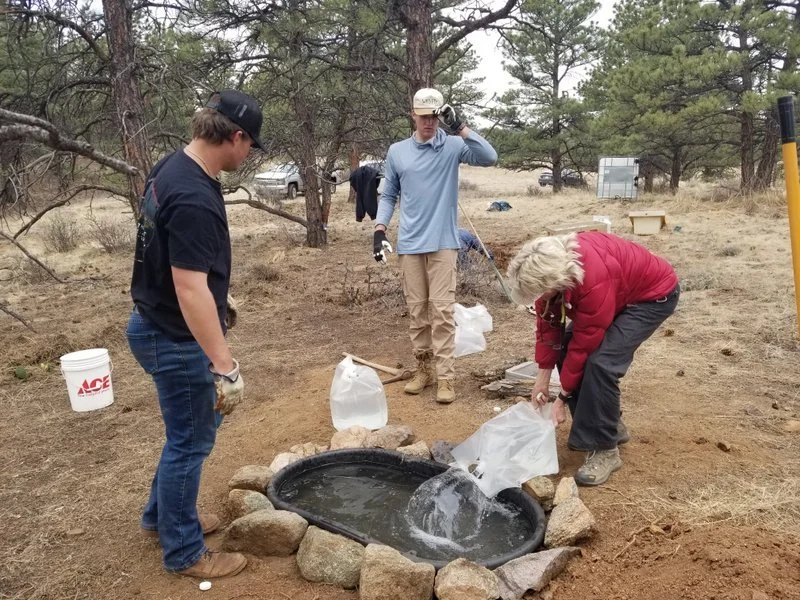
Filling the new guzzler!
Ulli taking a break from raking to fill the 50 gallon Rubbermaid tank.
When we stepped back to look at what we had built, the satisfaction settled in like shade on a hot day.
I would give this new guzzler installation a ten out of ten. Not because it was perfect, but because it was done with intention, with effort, and with respect for the land and the wildlife that call it home. Every volunteer brought strength and patience to the task. Ulli’s steady hands, Dan’s persistence, Cole and Jacob and their willingness to dig deeper when the soil hardened, all of it mattered.
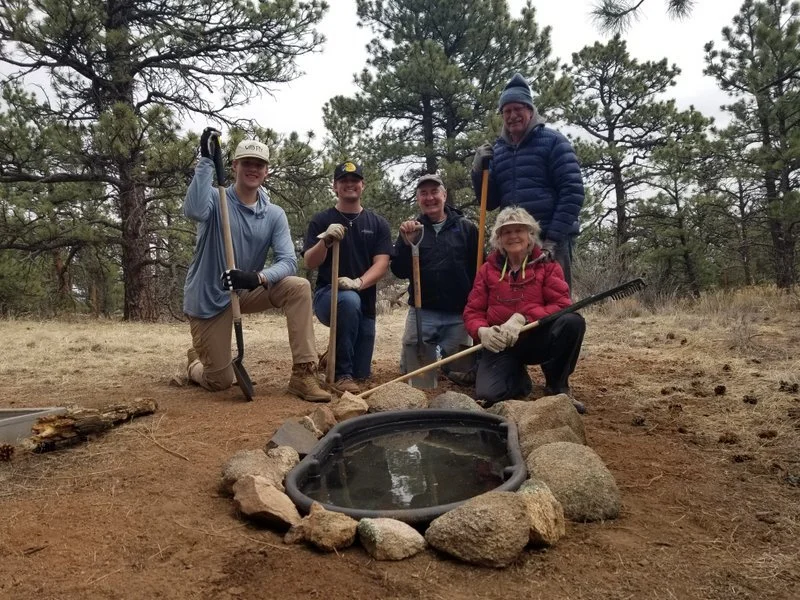
Group Photo
Back row, left to right: Cole, Jacob, David, Dan. Front row, Ulli. hatever it is, the way you tell your story online can make all the difference.
The goal of this project was simple in words, but powerful in meaning, to ensure that wildlife on Green Ridge has a reliable, year round water source.
Each October, the commercial guzzlers will be drained, cleaned, and dried to avoid freeze damage. The fifty gallon Rubbermaid tank will remain, enduring winter’s grip and offering water when natural sources are locked beneath ice or lost to drought. I will return to this place every two weeks, at a minimum, to make certain the guzzlers remain full, clean, and working properly. Maintenance is the quiet backbone of conservation. Building something once is not enough. Stewardship is measured in return visits, in checking valves, in hauling water when the sky refuses to provide it.
I will also work with Silas to repair the holes in the refill tank, or replace it with something less visible from the road. Visibility matters in ways many people never consider. A hidden system is less likely to be disturbed, less likely to attract the wrong kind of attention. He will make the final call on that.
As the morning stretched toward noon, we gathered our tools and stood in stillness for a moment before leaving. The wind carried the scent of dust and sun warmed stone. In the distance, a raven crossed the sky, its shadow sliding across the slope below.
Long after we were gone, the work would continue.
A mule deer doe would approach cautiously at dusk, ears pivoting, nose testing the air. A bobcat might slip in under the cover of darkness, paws silent on gravel. Songbirds would return with sunrise, dipping their beaks into the same water that had drawn them while we worked.
In landscapes where water once flowed freely, but now arrives less often and leaves too soon, a guzzler becomes more than a tank and pipe. It becomes a lifeline. It becomes the difference between endurance and loss, between presence and absence.
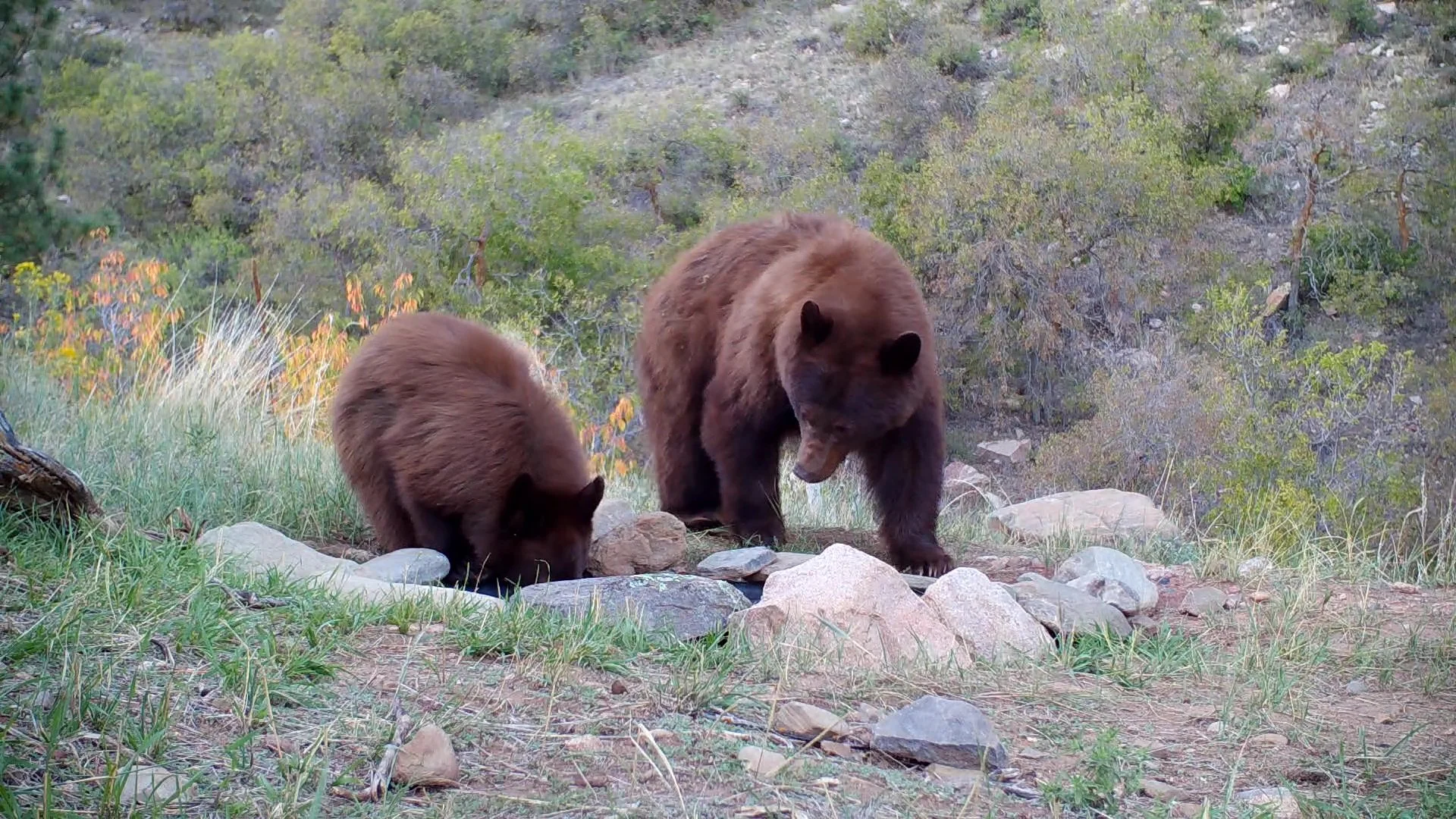
Black bear sow and cub visiting the guzzler at the mouth of Sulzer Gulch.
There is value in installing wildlife guzzlers that cannot always be measured in numbers or reports. It is found in the tracks pressed into damp soil where dryness once ruled. It is found in the soft flutter of wings at midday, in the quiet sip of a thirsty animal beneath an open sky.
Out here, water is not luxury. It is life.
And sometimes, with a shovel in hand and good people beside you, life can be given a fighting chance.