What is Successful Wildlife Management?
What Is Successful Wildlife Management?
by David Neils, lifetime hunter and fisherman
Colorado is a state that loves wildlife. We celebrate elk bugling in September, watch bighorn sheep on high ridges, photograph moose beside mountain streams and follow the tracks of mountain lions through fresh snow. We photograph, hunt, fish, hike, camp and explore because wildlife is part of what makes Colorado special.
We also spend a great deal of time talking about wildlife management. We debate hunting seasons, trapping regulations, population estimates, harvest numbers and access. We argue about wolves, mountain lions, bears, bobcats and coyotes. We hear repeatedly that Colorado's wildlife is being managed according to science.
But I believe we are missing the most important question: Does the animal benefit?
That should be the acid test for every wildlife management decision. Let’s start by defining “benefit”. Every species has a unique set of biological and ecological factors it depends upon for a healthy population. Let’s start with bobcats, one of the Colorado “furbearer” species. Based on peer-reviewed research these are the factors bobcats are dependent upon.
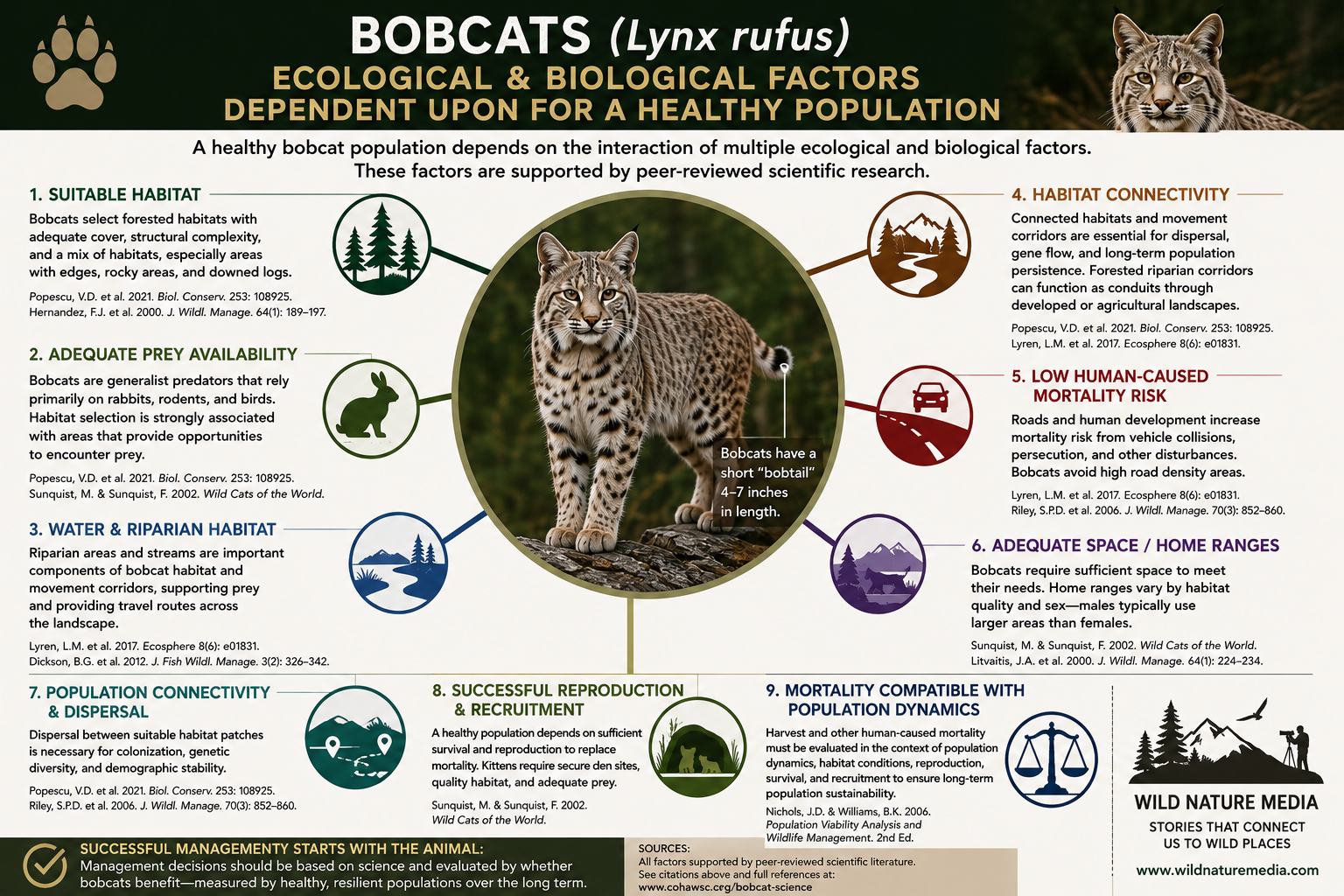
The first question should not be, How many animals can we harvest?
It should be, What does this species need to thrive?
Every species under the responsibility of a state wildlife agency deserves successful management based on its biology and ecology.
That includes the 17 species Colorado classified as furbearers, from bobcats and coyotes to beavers, foxes, skunks, weasels, raccoons and muskrats.
These animals are not interchangeable. They have different life histories, reproductive strategies, habitat requirements and ecological roles. Yet historically, many have been managed largely through one-size-fits-all hunting and trapping regulations rather than comprehensive, species-specific management plans.
That raises a fundamental question: How can we know whether management is successful if we have not clearly defined what success means for the animal?
A harvest number is not an answer.
A hunting season is not an answer.
A regulation is not an answer.
And the fact that a population has not collapsed is not necessarily evidence that management is working.
A successful management plan should identify the biological and ecological conditions a species needs to maintain a healthy population. It should identify threats, establish measurable objectives, monitor population health and evaluate whether management actions are producing the intended results.
Most importantly, the burden of proof should rest with the agency making the management decision.
If hunting or trapping is authorized, the public should be able to see scientific evidence demonstrating that the resulting mortality is compatible with the species' biological and ecological needs. The days of agency staff asking the question, “Do we have enough animals for hunters and trappers to kill this year?” must be replaced with questions about how each of the biological and ecological factors are supported or harmed by current regulations.
And when the evidence changes, management should change with it.
This is particularly important because wildlife agencies operate in a political environment. They answer to commissions, legislators and the public. They interact with hunting, trapping, agricultural, conservation and recreation interests.
However, the biological needs of an animal should never be replaced by politics.
A management program should not be judged solely by the agency that created it. Independent scientists should periodically evaluate whether the available evidence demonstrates that the management program is benefiting the species.
The question should not simply be:
Did the agency follow its regulations?
It should be:
Did those regulations produce a measurable benefit for wildlife?
Those are very different questions.
Colorado is currently at a crossroads. A segment of hunters, trappers and fishermen are pushing a “Right to Hunt” constitutional amendment to ensure hunting and trapping are the primary methods used to manage wildlife in the state. The goal is to silence wildlife advocates and lock them out of wildlife management decisions. They are also pushing to bring back cruel hunting and trapping methods, including leghold traps, spring bear hunts which result in baiting bears and chasing them up trees with hounds before killing them. Spring bear hunts would result in orphaned black bear cubs starving to death. They push these cruel “traditional methods of killing” while claiming they are science-based. Nothing could be further from the truth.
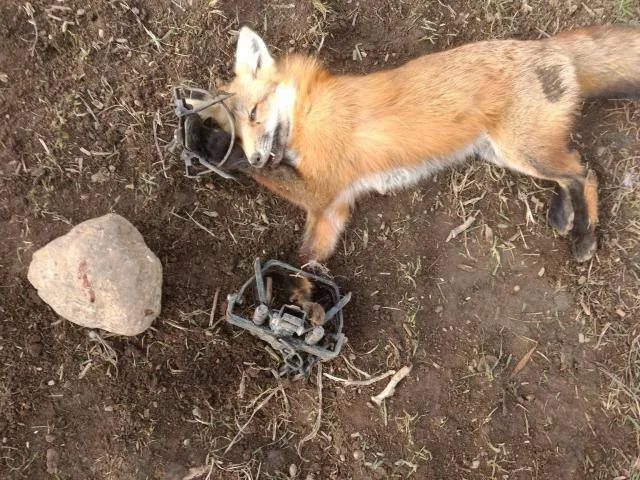
VOTE NO on Right to Hunt Amendment 83
This constitutional amendment would bring cruel leghold traps back, something Colorado voters banned in 1996. Wildlife Deserve Better!
Fortunately, more Colorado hunters and anglers are waking up and realizing this Right to Hunt amendment will hurt wildlife as well as put hunting, trapping and fishing on the chopping block in years to come as the public gets fed up with these anti-wildlife tactics.
Colorado Hunters and Anglers for Sensible Wildlife Conservation
https://www.coloradohuntersandanglers.com/
This moment also presents a larger opportunity.
Colorado can establish a modern standard for what successful wildlife management actually means.
That standard should begin with the animal.
If a species is being hunted or trapped, we should know what that mortality means to the health of the population as well as the health of the ecosystem it inhabits. If we do not have enough information to know, we should acknowledge that uncertainty rather than confuse the absence of evidence with evidence of safety.
And when credible science demonstrates that a management strategy is not benefiting a species—or that we simply cannot demonstrate that it is—the responsible response should be to reconsider the regulations.
That is not anti-hunting.
It is not anti-trapping.
It is not anti-wildlife management.
It is pro-wildlife management.
Hunters and anglers have long contributed enormously to conservation in Colorado. Wildlife watching, photography, hiking and other forms of outdoor recreation also connect millions of people to wildlife and wild places. All of us have a stake in getting wildlife management right.
But the animal should come first.
Our traditions, our recreation, our economics and our political preferences should never become more important than the biological needs of wildlife entrusted to us.
Ultimately, successful wildlife management should not be measured by how effectively we manage people.
It should be measured by how effectively we manage for wildlife.
And that begins with one deceptively simple question:
Does the animal benefit?
If we cannot answer that question with credible evidence, perhaps it is time to ask whether we are truly managing wildlife—or simply managing the consumptive use of it through hunting, trapping and fishing.
Vote NO on the Right to Hunt Constitutional Amendment 83.
Author: David Neils has spent a lifetime hunting and fishing in Montana and Colorado. For the last 23 years he has logged over 35,000 hours in the field studying and filming mountain lions. For more information, visit Wild Nature Media, www.wildnaturemedia.com.