Pure Instinct: The Mountain Lion
The flood of morning sunshine spills across the mountainside, but the lion remains in the shadows, moving quietly up the valley where the last fingers of cold air still drain downhill. In this fleeting hour after daybreak, the mountain offers a narrow window of opportunity. The lion knows nothing of clocks, yet its movements are governed by rhythms far older than timekeeping, the daily breathing of the mountains themselves.
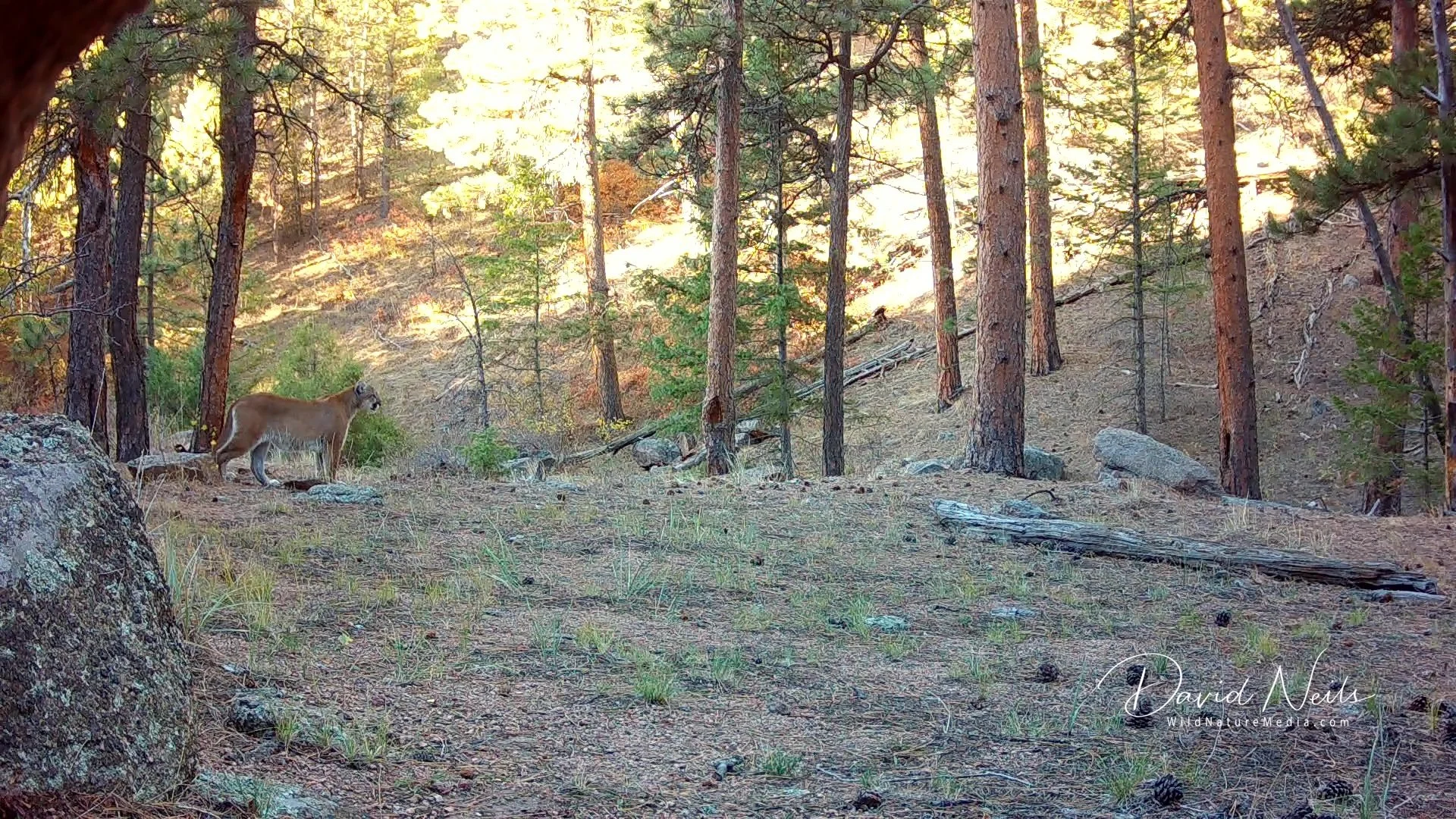
The mountain lion takes advantage of the cold air drainage as it moves up the valley in the morning.
Soon, the cold air will give way to rising thermals, currents of warming air that climb the slopes and carry the scents of the living world skyward. If the hunt continues, the lion may change course, climbing toward the ridgeline where those currents gather the stories of the landscape and deliver them to its sensitive nose. Every passing scent is a message. Every shifting breeze offers a clue to what lies ahead.
From that elevated ground, the mountain lion gains another advantage. Looking down upon the slopes, it can see the landscape from an angle that often works in its favor. Watch deer, elk, bighorn sheep, or caribou feeding on a hillside. They lower their heads to graze, then lift them to search for danger. Observe them long enough and a pattern emerges. Their eyes sweep the slopes, following the contours of the land and searching downhill. They look uphill, too, but less often. And there, in that small gap in their vigilance, the mountain lion finds yet another advantage, a quiet reminder that survival in the wild often belongs to the one who understands the landscape best.
But the story of the mountain lion reaches far beyond the hunt.
This great cat is more than an apex predator. It is a keystone species, woven into the health and balance of the living landscape. By influencing where and how deer and elk feed, mountain lions can help reduce concentrated grazing pressure in vulnerable areas, including the lush ribbons of vegetation along streams and springs. When these wild ungulates keep moving, the plants that anchor riparian soils have a better chance to recover, and the intricate communities that depend upon them can flourish.
And so the benefits ripple outward. Healthy streamside vegetation provides shelter for birds, food for insects, and habitat for countless other creatures. The consequences of a mountain lion's presence can reach places the lion itself may never visit.
Here is one of nature's remarkable truths: the predator and its prey are not merely opponents in a contest for survival. They are participants in a much larger story, one in which the lives of individual animals help shape the health of an entire ecosystem.
Spend enough time in wild country, and you begin to see the mountain lion differently. Not simply as a hunter moving through the shadows, but as part of the living force that helps keep the wild world wild. The mountain lion does not set out to manage a forest or restore a streamside meadow. It simply lives as it has evolved to live. Yet through that existence, it helps sustain the very web of life upon which so many other species depend.
And perhaps that is among the greatest lessons the wild has to teach us: sometimes the most important work in nature is accomplished by a creature that is simply being itself.