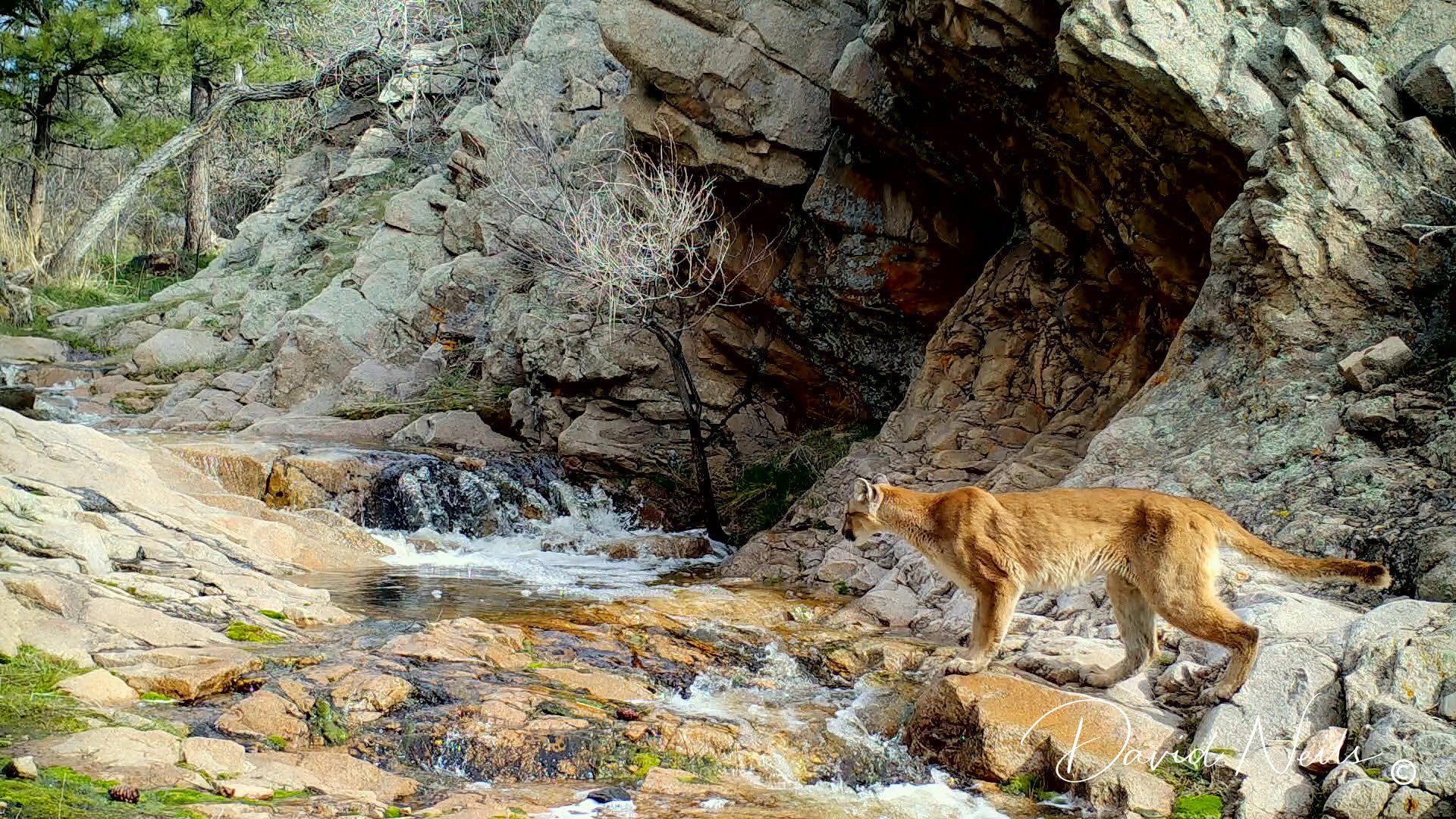
A young female mountain lion crossing a stream in northern Colorado.
The defeat of Amendment 83 gives Colorado an opportunity to demand proof that wildlife management supports the biological and ecological needs of every species—not simply the interests of those who harvest them.
By David Neils | Wild Nature Media
There is a certain wisdom in wild places that cannot be learned in legislative chambers, found in political slogans, or measured by the number of hunting licenses sold.
It is written in the tracks of a mountain lion crossing a snow-covered ridge, in the patient work of a beaver restoring a mountain stream, and in the haunting calls of wolves returning to valleys where their voices have been absent for generations.
For more than two decades, I have spent countless hours among these wild creatures, observing their lives in the forests, mountains, and river corridors of Colorado. What I have learned is both simple and profound: every species has a place, every life has purpose, and the health of the natural world depends upon relationships far more intricate than we have yet begun to understand.
And yet, Colorado Parks and Wildlife, and most state wildlife agencies continue to manage wildlife as though its greatest value lies in what we can take from it.
When Hunting Is Conservation, Who Benefits?
For years, we have heard the familiar proclamation: "Hunting is Conservation."
Sometimes it is. Hunting can contribute funding, support habitat protection, and help maintain wildlife populations under appropriate circumstances.
But if conservation benefits wildlife, shouldn't we first establish what benefit actually means?
The answer is remarkably straightforward.
To benefit a wildlife species means supporting the biological and ecological factors upon which that species depends for a healthy, sustainable population. Period.
These factors include suitable habitat, sufficient prey or food, clean water, reproductive success, genetic diversity, natural behavior, ecological relationships, and the ability to adapt to environmental change.
A management practice deserves to be called conservation when credible evidence demonstrates that it supports these essential requirements.
That brings us to a question rarely asked by those who insist hunting and trapping are synonymous with conservation:
How does killing an animal benefit the biological and ecological requirements of its species?
For Colorado's seventeen species classified as "furbearers," a term rooted in an outdated view of wildlife as commodities, this question is particularly important.
Bobcats, beavers, foxes, badgers, martens, weasels, and the other species in this classification are not simply sources of fur. They are predators, prey, ecosystem engineers, and participants in complex ecological communities.
Consider the beaver. Its dams create wetlands, store water, improve riparian habitat, and support countless other species. Killing a beaver does not restore a watershed. The living animal does that.
Or consider the bobcat, whose predation helps shape relationships among small mammals, birds, and other wildlife.
What ecological benefit does recreationally killing that bobcat provide?
I have yet to see convincing, species-specific scientific evidence demonstrating that recreational hunting or trapping of Colorado's seventeen furbearer species improves their long-term population health by supporting the biological and ecological factors they depend upon.
That does not mean every removal necessarily harms a population or that lethal intervention is never justified. It means the burden of demonstrating a conservation benefit belongs to those authorizing the killing. Colorado Parks and Wildlife have failed that burden of proof for decades.
The acid test is simple: Does the practice demonstrably support the essential biological and ecological needs of the species?
If it does not, calling it conservation does not make it so.
The Smokescreen of Science-Based Management
During the Amendment 83 campaign, yard signs appeared across Colorado urging voters to "Vote Yes on 83" and "Support Science-Based Wildlife Management."
It was a clever pairing of words.
Who could possibly oppose science-based wildlife management?
Certainly not me.
But science is not a slogan. It is a process requiring credible data, testable conclusions, peer review, and the willingness to change practices when evidence demands it.
The contradiction became especially apparent during the Colorado Parks and Wildlife Commission's discussions of furbearer regulations in Westminster, Colorado during the summer of 2026.
Many advocates of maintaining existing hunting and trapping practices defended the status quo, despite serious questions about the scientific foundation supporting those regulations.
For years, Colorado allowed extraordinarily liberal recreational harvest of furbearers without the species-specific population information and comprehensive management plans that should underpin responsible decisions.
New daily limits have since been adopted, but restricting the number of animals a person may kill each day is not the same as establishing a scientifically defensible annual harvest. And with the current daily bag limit of two animals per day, over 23 million bobcats could be killed each year. That is reckless mismanagement and shouldn’t be tolerated.
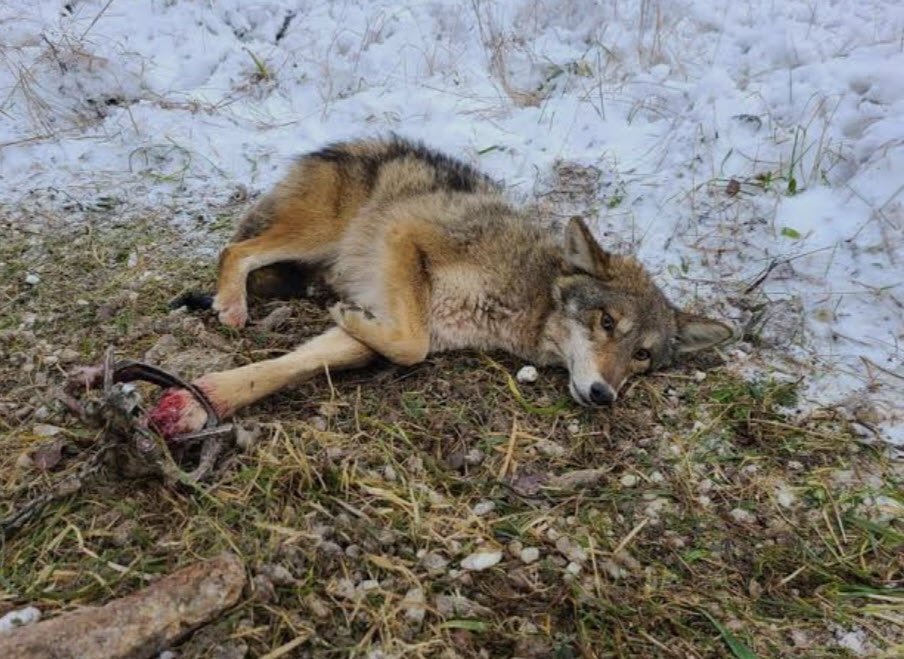
This is what the passage of Amendment 83 would have paved the way for, leghold traps, something Colorado voters rejected in 1996. Fortunately, Amendment 83 was soundly defeated by voters who reject this cruel and inhumane treatment of wildlife.
Without reliable population estimates, reproductive data, mortality information, and species-specific management objectives, how can an agency determine what level of harvest is sustainable, much less beneficial?
Calling such a system "science-based" does not resolve those questions.
The defenders of the status quo didn't have a mangled, bloody leg in a trap to stand on.
Fortunately, many Colorado voters recognized the difference between invoking science and demonstrating it.
The lesson from Amendment 83 is clear: wildlife management deserves public confidence only when its scientific foundations are transparent, independently evaluated, and open to challenge.
Killing Wildlife Is Not a Management Philosophy
Amendment 83 would have established hunting and fishing as the preferred means of managing fish and wildlife populations.
That provision alone should have troubled anyone concerned about the future of conservation.
Killing wildlife should never be the primary philosophy guiding its management.
The first priorities must be protecting and restoring habitat, maintaining ecological relationships, preserving migration corridors, supporting reproductive success, and ensuring that populations remain healthy and resilient.
Regulated hunting may have a legitimate role in certain management programs. But it is a tool, not a conservation objective.
The distinction matters.
When wildlife management begins with harvest opportunities rather than ecological needs, the priorities are reversed.
And when license revenue becomes a measure of management success, we risk confusing the financial needs of an agency with the biological needs of wildlife.
The dividing line should never be drawn between those who hunt and those who do not. It should be drawn between practices that sustain wildlife and those that diminish it.
Ethical hunters, anglers, wildlife photographers, naturalists, ranchers, and conservation advocates can find common ground in this principle.
We may interact with wildlife differently, but we all have a responsibility to protect the natural systems upon which it depends.
Hunting, trapping, and fishing are not inherent constitutional rights in Colorado. They are regulated privileges that carry obligations.
Those privileges should be exercised with restraint, respect, and a commitment to the long-term welfare of wildlife.
A Scientific Standard for Every Species
The defeat of Amendment 83 gives Colorado an opportunity to establish a higher standard of wildlife stewardship.
Colorado Parks and Wildlife should be required to develop and maintain comprehensive, species-specific management plans for every wildlife species for which it authorizes recreational harvest, all keystone species and all wildlife under threat of extinction.
These plans must be grounded in peer-reviewed science and credible research, with independently evaluated population estimates, habitat requirements, reproductive and mortality data, ecological relationships, and clearly defined conservation objectives.
They must establish measurable indicators of population health and explain how proposed harvest levels support those objectives.
Where essential information is missing, the agency should acknowledge the uncertainty and apply appropriate precautionary measures rather than assume that continued harvest is harmless.
And the public deserves access to the evidence supporting every consequential management decision.
This is not an unreasonable demand.
It is the minimum standard we should expect from an agency entrusted with wildlife held in the public trust.
The North American Model of Wildlife Conservation recognizes wildlife as a public resource and science as a foundation of management. Those principles should unite hunters and nonhunters, not divide them.
The question we must continually ask is not how many animals we can legally kill.
It is how effectively we are protecting the conditions that allow them to flourish.
What We Choose to Leave Behind
There are mornings in the mountains when the first sunlight reaches the valley floor, the wind is still, and the tracks of a mountain lion appear in the damp earth beside a stream.
In such moments, the arguments of politics seem very far away.
The lion has no knowledge of constitutional amendments, legislative hearings, or organizations claiming to represent its interests.
It knows only the ancient necessities of its existence: water, shelter, prey, territory, and the opportunity to raise another generation.
And that is precisely why our responsibility is so great.
The wild creatures of Colorado cannot stand before a legislative committee and defend their place in the world.
That responsibility falls to us.
The defeat of Amendment 83 demonstrated what an informed and engaged public can accomplish. Now we must demand that the same commitment to science, transparency, and accountability guide the management of every wildlife species in Colorado.
The measure of our success as conservationists will not be found in the number of animals harvested, the licenses sold, or the political battles won.
It will be found in the abundance of life that remains.
In rivers that still run clear. In forests alive with wild creatures. In predators and prey continuing their ancient relationships across healthy, connected landscapes.
Caring for wildlife is not extremism. Indifference to its loss and suffering is.
Wildlife deserves better. We deserve better.