
Wildlife Filming Workshop
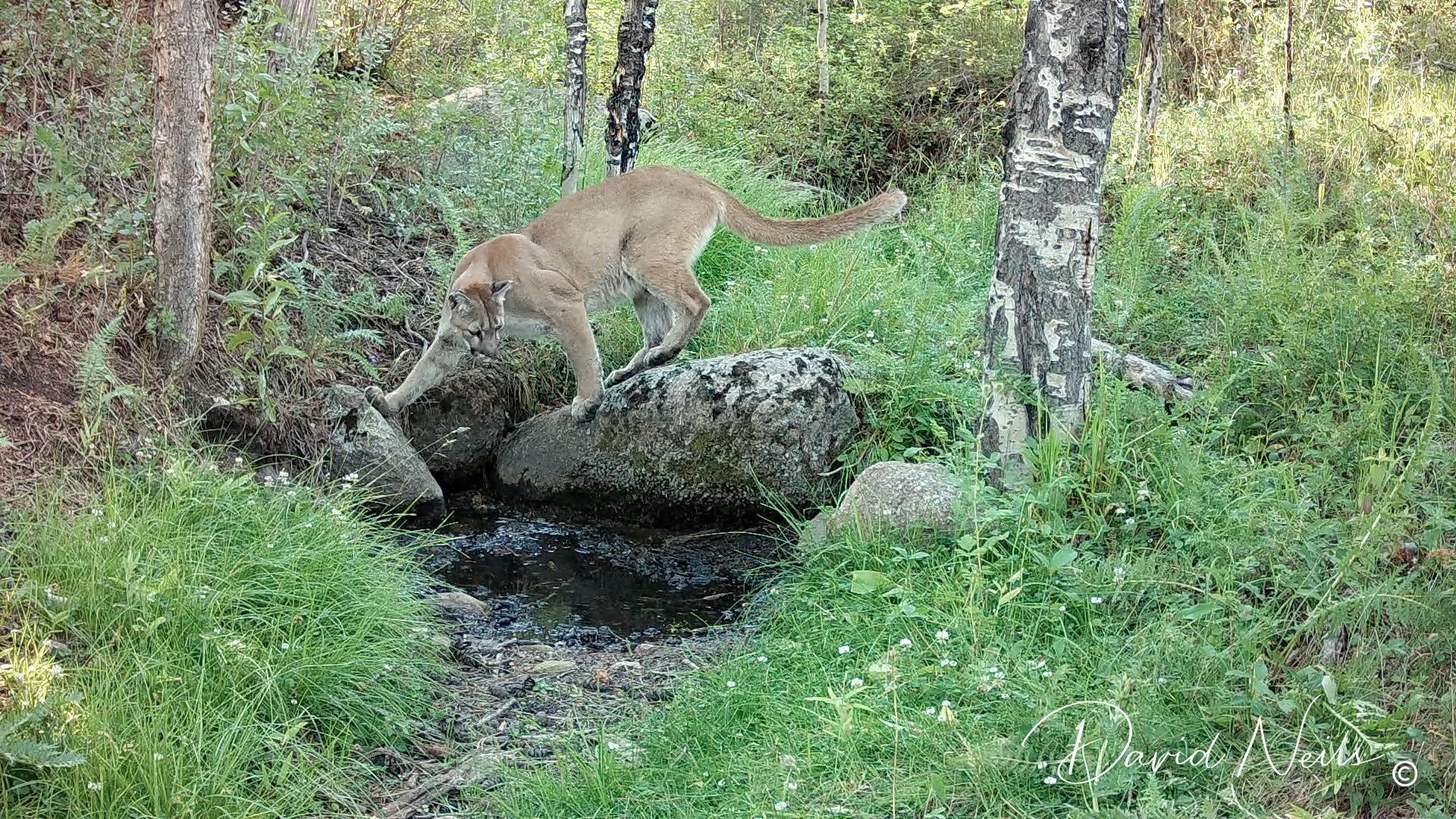
A female mountain lion stopping by a mountain spring for a drink. There were several factors I considered when setting up the camera for mountain lions. We will cover these factors during the workshop.
Wildlife Filming Workshop (Online)
Friday, March 27, 7:00 pm - 8:30 pm
Cost: $55 (A zoom link will be sent to all participants)
Capturing wild behavior of completely wild animals in wild places. The perfect trifecta.
One of the main advantages of using remote cameras is the ability to capture completely wild behavior of wildlife. I’m excited to share successful tips for capturing stunning video and images, including learning where and how to set up your cameras. Leverage 32,000 hours of studying and filming mountain lions in Colorado and Montana.
The workshop will include:
Advantages of filming and studying wildlife using remote cameras (trail cameras and high end camera traps)
Preferred camera equipment, batteries and accessories
Selecting camera locations based on seasons, topography, air currents, prey and predator density and more
Camera setup to maximize results, including video and image quality
Reducing false triggers or non-wildlife captures
Creating stunning images from video frames
Questions and Answers
I'll be leading a Mountain Lion Hike the following morning as well. I hope you can join us.

A female lion checking out a natural scent post, the pile of rocks. Just pile up some rocks 12 - 15 inches high and the first animal to mark it is usually a coyote followed by red and grey fox. Over time, multiple animals mark it and mountain lions will stop to check out who is in the neighborhood, offering side profile video and images. Without the rock pile I would have captured the back end of the lion and little else as she sauntered up the trail, into the cold air drainage. Simple and effective.

Looking for lion tracks with my dog Autumn, a French Brittany Spaniel.
MEET YOUR HOST - DAVID NEILS
David Neils has spent a lifetime studying elusive wildlife. Growing up in northwest Montana he was surrounded by grizzlies, wolves and mountain lions. He started venturing into the Cabinet Mountain Wilderness, without adults, for up to ten days at a time at the age of eleven. Wild grabbed him and never let go. Today he intentionally spends time, three times a week, where mountain lions are active. When he sees his first fresh mountain lion track for the day he can feel his heart rate drop because of what that track represents. His house in Loveland is simply a place to keep his boots dry for the next adventure. His home has always been in nature.
David has spent the last twenty years studying and filming mountain lions in some of the wildest country of Colorado and Montana. He developed a system, using four natural factors, which allows him to pinpoint mountain lion activity throughout the United States, Canada and Chile. He enjoys sharing this knowledge and supporting others to study this magnificent apex predator through a personalized Mountain Lion Workshop which includes mapping mountain lion activity in the client’s chosen area, up to 100 square miles.
In addition to sharing a passion for mountain lions and other wildlife, he enjoys supporting others to navigate boldly and safely in the backcountry. He developed the Ten Essentials Plus system to address the common backcountry situations that result in a Search and Rescue operation. In fact, it completely eliminates the Search in Search and Rescue. Instead of wasting time trying to find you, they simply need to reach you, saving hours or days looking for you. He also provide hands on orienteering courses, supporting clients to have the confidence to explore the wild areas around them.