Tracking Mountain Lions January 10, 2026
Fresh snow transforms the forest into a canvas, and few creatures paint a clearer story across it than the mountain lion. When the storm passes and the world goes quiet, we follow their footprints—perfectly placed impressions that reveal not just where the lion has been, but how it moves, thinks, and survives. Each step tells part of a larger narrative about this elusive apex predator that few people ever see, yet whose presence shapes the entire ecosystem.
A mountain lion walking with a natural, relaxed gait moves with remarkable efficiency. The back foot lifts and lands almost exactly where the front foot was, a behavior called direct registering. This simple yet elegant movement saves energy—an essential adaptation for a solitary hunter that can travel miles each night. Watch closely, and you’ll notice the tracks often form nearly a straight line in the snow. That’s because the lion’s front shoulders come close to mid-line as it walks, aligning its body for stealth and balance.
As the trail winds through gullies, across ridgelines, and along game paths, you can see how the lion uses the contours of the land to its advantage. It moves in and out of cover—stands of aspen, clusters of juniper, rock outcroppings—always positioning itself to remain unseen by deer and elk. The snow doesn’t just show us a trail; it reveals a strategy. Every track is a clue in a story of survival, patience, and power—a glimpse into the life of a keystone species that keeps the wild in balance.
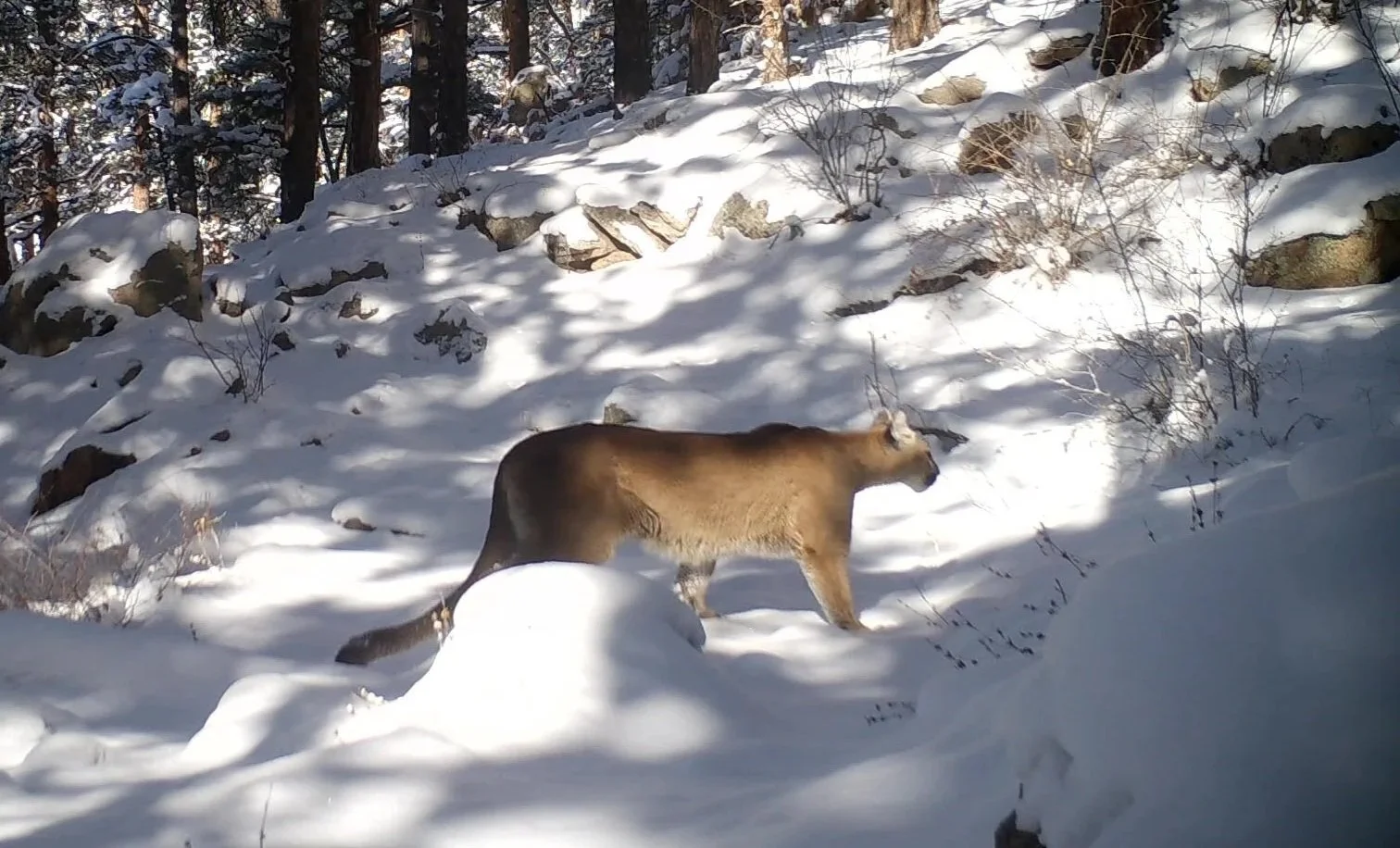
A mountain lion hunting through winter range for deer and elk. During winter months they do everything they can to minimize calorie loss while maximizing calorie gain.
What: Tracking Mountain Lions
Where: Northwest of Fort Collins (details will be sent to participants)
We will meet at Me Oh My Coffee and Pie in Laporte, Colorado at 8:00 am, 3310 WCR 54G, Laporte CO 80535
When: Saturday, January 10, 2026, 8:30 a.m. - 3:00 p.m.
Cost: $220 per participant (Limited to Five Participants)
The Hike Includes:
looking for mountain lion tracks and then backtrack to better understand their behavior
air currents and how they decide wildlife movement for many mammals.
learning how mountain lions hunt and navigate across their territories
why mountain lions are elusive and yet predictable
how mountain lions are different from other predators
being safe in mountain lion country
learning how to maximize your chances of seeing wildlife and wildlife activity
being prepared to deal with backcountry emergencies
setting up remote cameras to film wildlife successfully
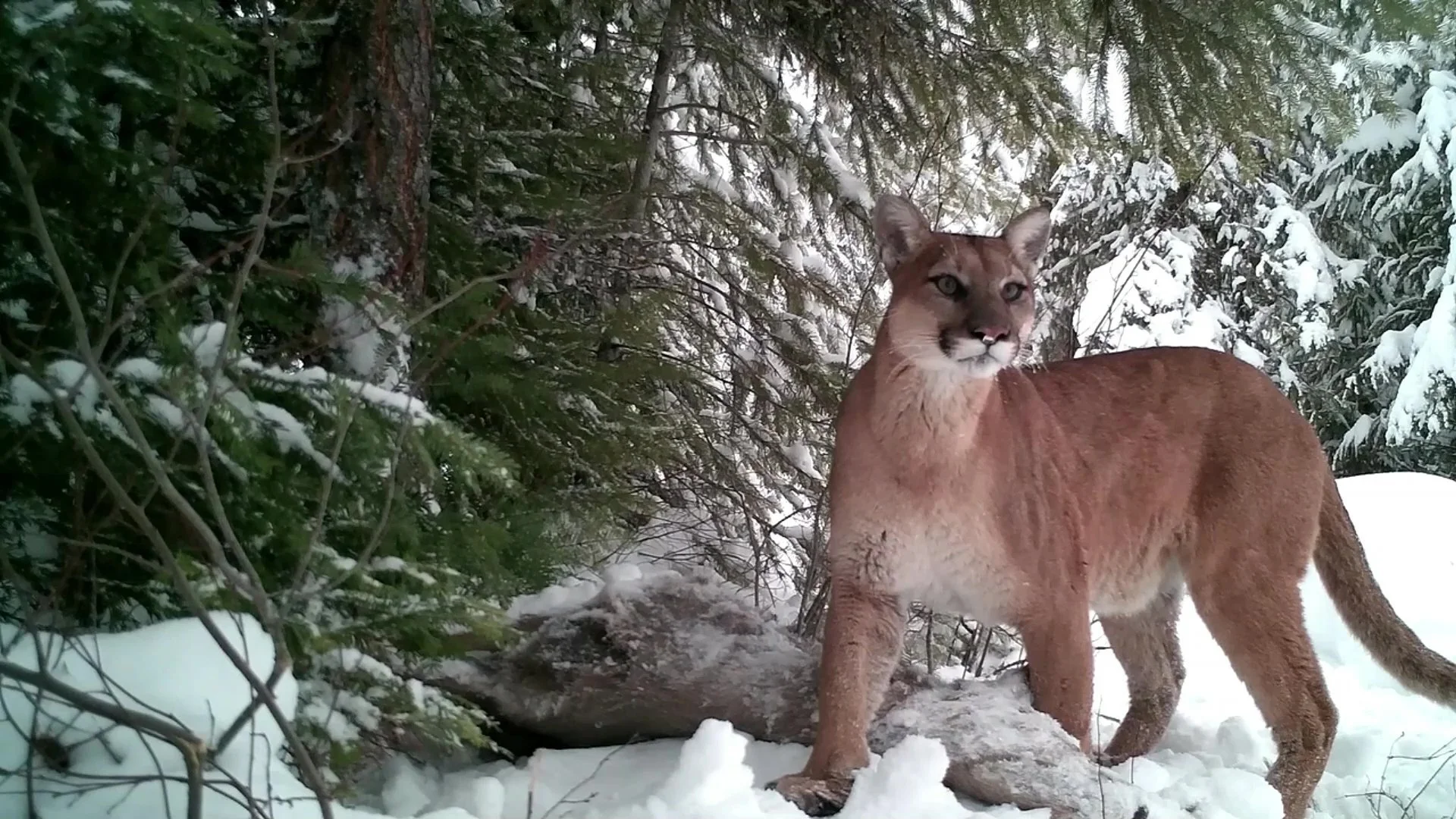
Female mountain lion stands guard over a whitetail deer. I filmed her and her cubs feeding on the carcass for five days. When they’d leave the carcass she’d cover it up with more than a foot of snow to keep the birds off. Once the birds find it they tell all the scavengers, including the fox and coyote.
WHAT TO BRING
layered clothing
decent footwear for hiking (closed toe footwear)
snacks and lunch
at least two liters of water
camera (cell phone is plenty)
a sauntering spirit
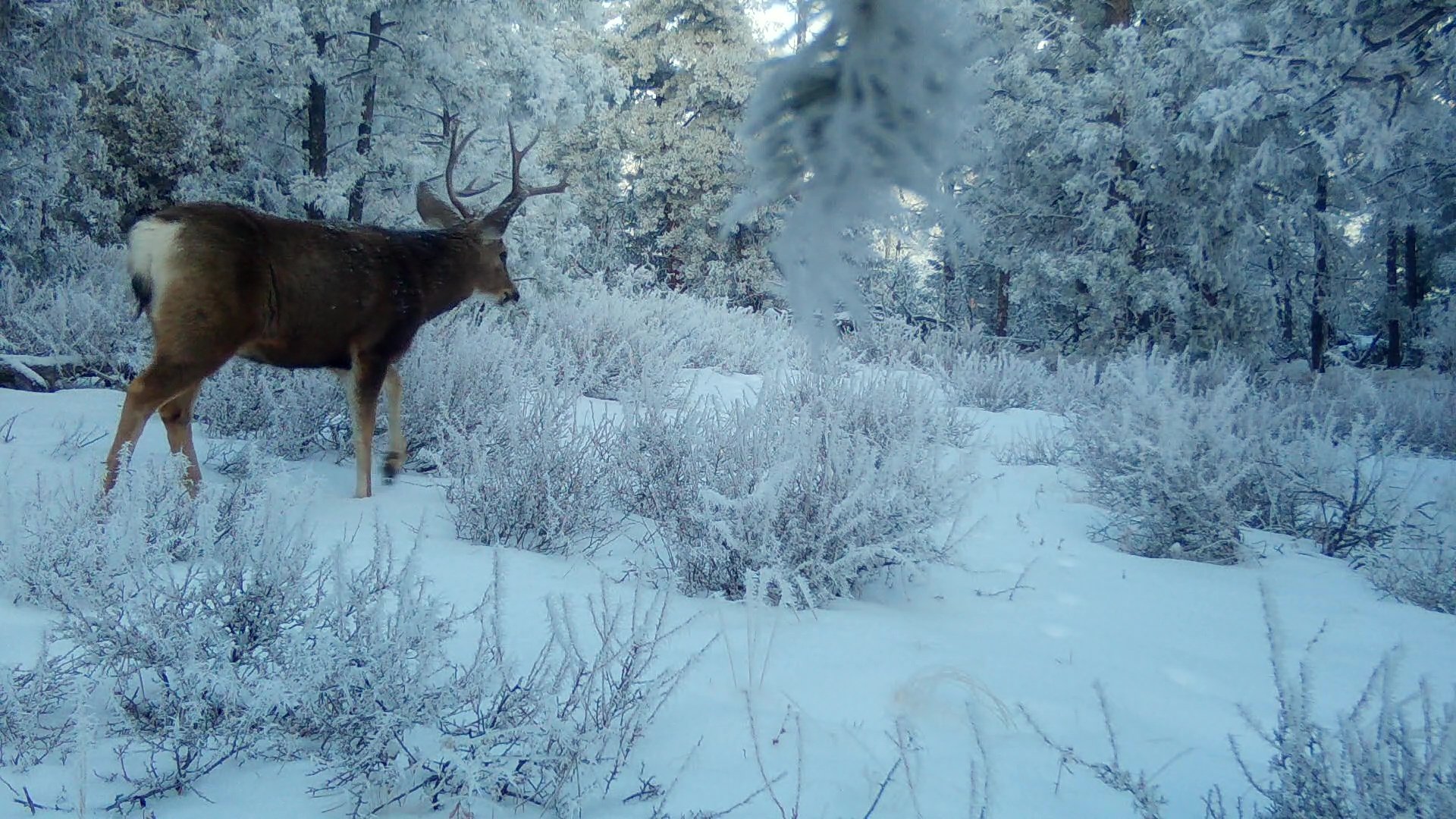
Mountain lions are patient. They will wait until a single deer or elk falls behind the herd, ensuring they won’t spook the herd if they choose to attack this individual. Mountain lions cannot afford to have the deer and elk herds leave their territory.