Browning’s Recon Force Line of Cameras
When David Neils of Wild Nature Media first turned his attention to filming mountain lions twenty-two years ago, the tools of the trade were as scarce as the cats themselves. The market offered no camera worthy of the task, so he did what any patient student of wild places might do, he made his own.
He scavenged used Sony point-and-shoot cameras, carefully unthreading their insides like a watchmaker at work. He soldered wires to shutter, ground, and common contacts, ran them to a control board fitted with a PIR lens, and sealed the whole contraption inside a waterproof Pelican case. Each camera cost him about two hundred dollars to build and returned images, day and night, that felt nothing short of miraculous. Nothing available at the time could touch their quality. And yet, for all their still beauty, video remained just beyond reach.
That changed when he came upon a Sony video camera worth the gamble. It was standard definition, recording to tape, capable of an hour of footage on its largest battery. The control board sipped power from a nine-volt battery that could last for months in the field. He added a five-dollar waterproof microphone, humble in price, rich in sound. The first footage it captured showed a mountain lion investigating a scrape on a wind-scoured, snowy ridge. In that moment, David was lost to the pursuit. Looking back now, he laughs at how close he had placed the camera—so close he framed the lion’s head between its own legs. Wisdom, like wilderness, is often earned by proximity.
The landscape shifted again around 2013, when Browning introduced the Recon Force line. For the first time, there was an off-the-shelf solution capable of 1080p video at 60 frames per second, a pairing that proved golden. For a sub-$200 camera, the day and night footage was astonishing, and it only improved through later models like the Recon Force Elite HP5 and the Spec Ops with its fully blacked-out IR. These cameras changed everything. Wildlife advocates now held a tool that could pull still images from video, sixty frames per second, each a chance to capture a fleeting truth. Those millisecond moments tell deeper stories, stories that build understanding and support for wildlife management where the well-being of the animal comes first.
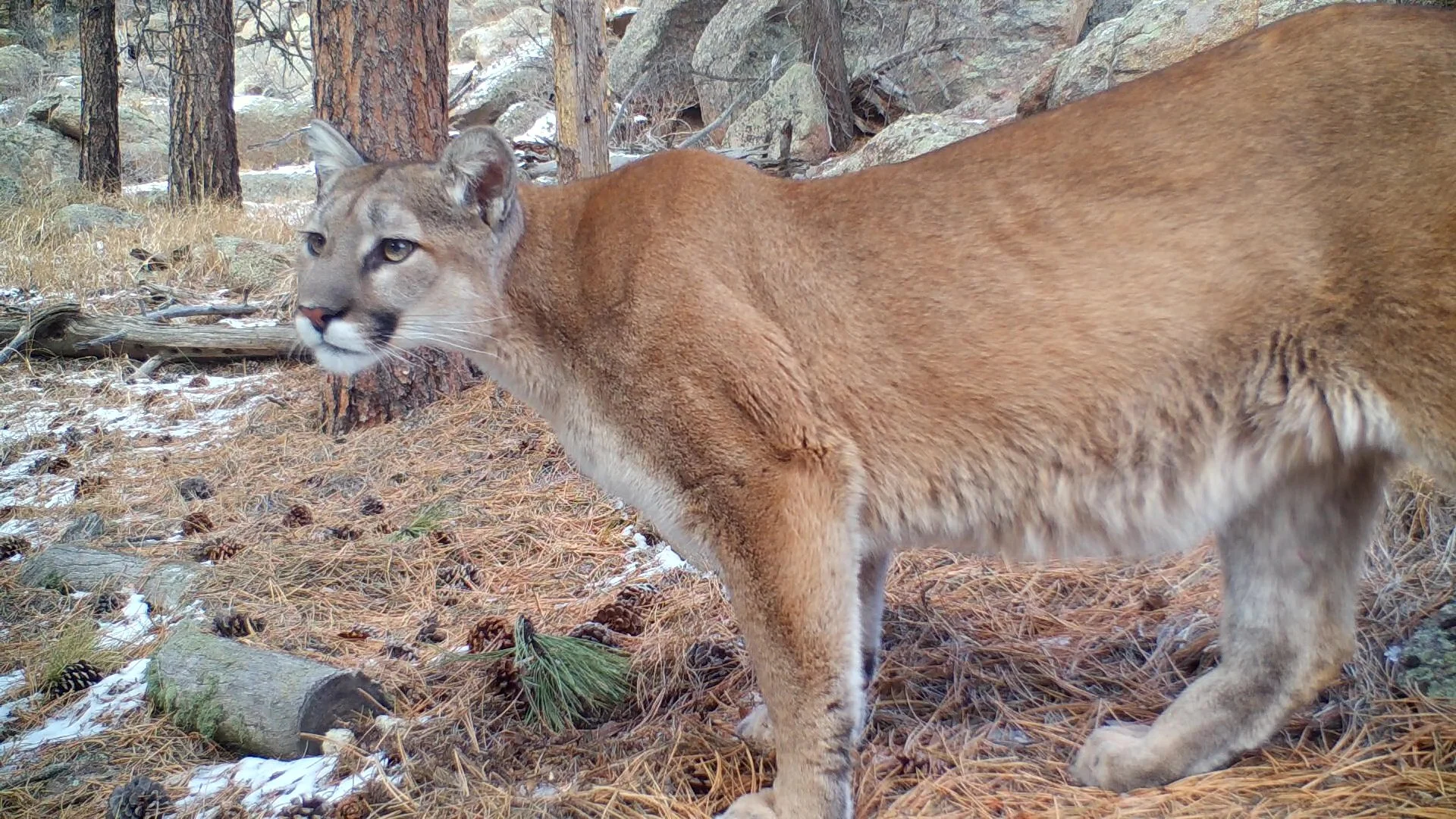
Female mountain lion checking a scrape site. This is a still image from a video frame from the Browning Recon Force Elite HP5 camera. Incredible for a sub $200 camera!
In the fall of 2025, the last of those trusted cameras rolled off the line. The community waited, quietly but intently, for what would come next.
After languishing in customs for more than a month, two new models finally emerged: the Browning Recon Force Elite HP5 Ultra and the Browning Spec Ops Elite HP5 Ultra.
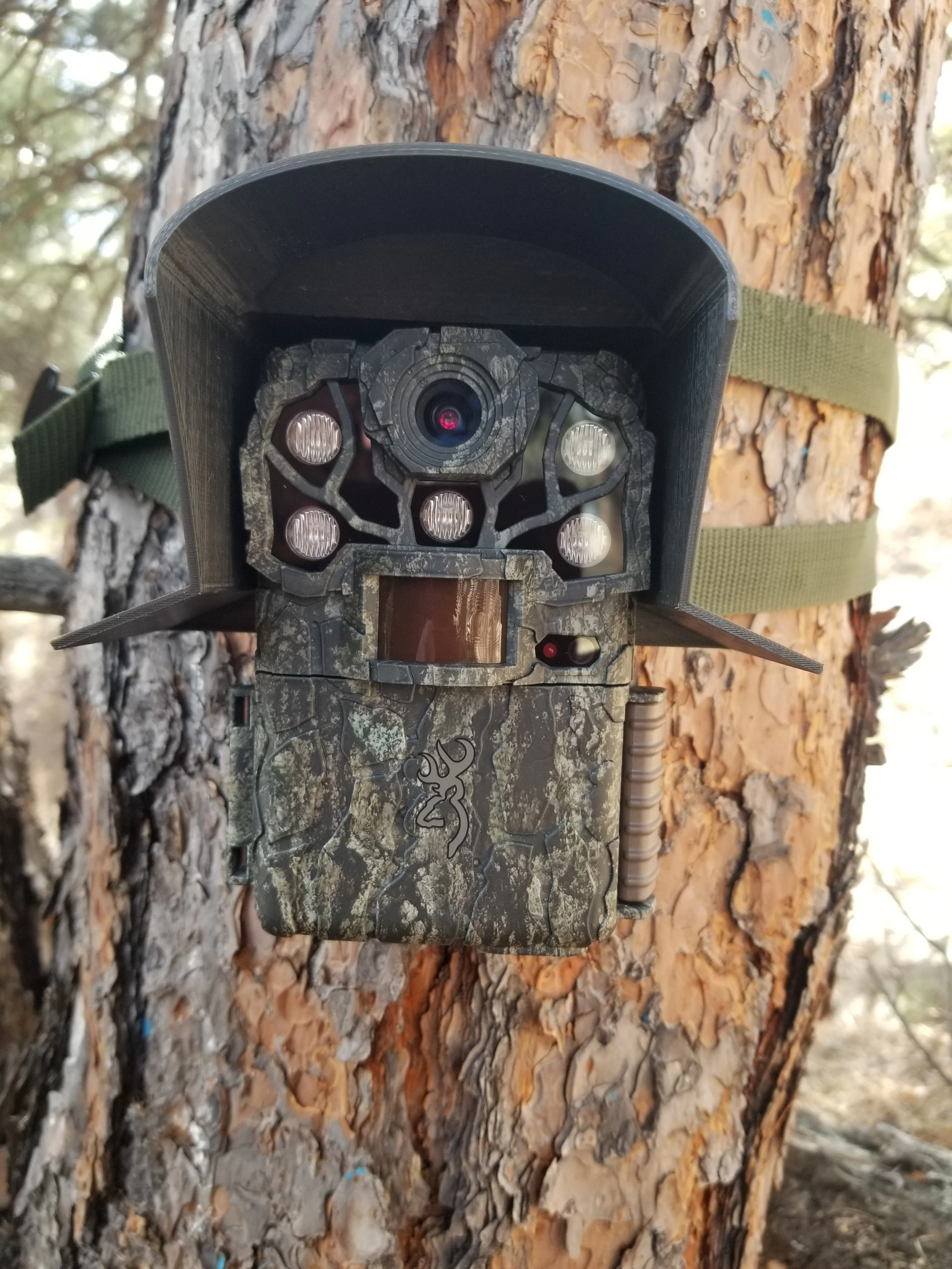
Testing the firmware on the new Browning Recon Force Elite HP5 Ultra camera. The $12 waterproof rain/snow hood was purchased from Ebay.
David tested the Recon Force Elite HP5 Ultra, and the results were disheartening. Pixelation, white balance, and audio all fell far short. Still, there was a strange relief in how obvious the problems were. Browning acknowledged the issues and halted sales; retailers followed suit. It was the right decision, and it kept hope alive that Browning would correct course and continue building tools worthy of the wild.
That optimism now seems well placed. A recent firmware update has shown excellent early results, and David currently has two Ultra cameras in the field, quietly watching as the land goes about its ancient business. He will share his findings with Browning by Friday, February 5, 2026.
His expectations remain high, for solid video, honest audio, and a camera that respects both the subject and the storyteller. He has offered Browning several recommendations born of long nights, cold ridges, and hard-won experience:
A better microphone, for one. Years ago, a five-dollar waterproof mic delivered audio far superior to what these cameras offer today. Add a proper microphone and a windscreen, and do it for less than five dollars per unit. People watching a video will put up with a short section of questionable footage. They will never put up with bad audio.
A waterproof battery compartment, the most vulnerable gateway for moisture and failure.
A better lens. The community of wildlife researchers and conservationists continues to grow, and there is room for a compact camera that rivals DSLR traps while running for months on exceptional battery life. A premium camera with a one-inch lens would place Browning far ahead of the field.
A metal tripod bracket. Plastic mounts fail when bears, elk, and other strong-willed citizens of the forest decide to investigate.
And finally, fewer models. Focus on four non-cellular cameras and perhaps two cellular ones. Pour engineering and marketing energy into doing a few things exceptionally well. The Recon Force line already proves what’s possible. Build one truly premium camera that can stand beside DSLR camera traps without apology.
Whether Browning takes these suggestions to heart remains to be seen. Time, as always, will tell. For now, David is confident the bugs will be fully worked out, and that these new Ultra cameras will soon return to their rightful task, capturing the quiet drama of wild lives and distilling from motion those still moments that remind us why these places, and these creatures, matter at all.